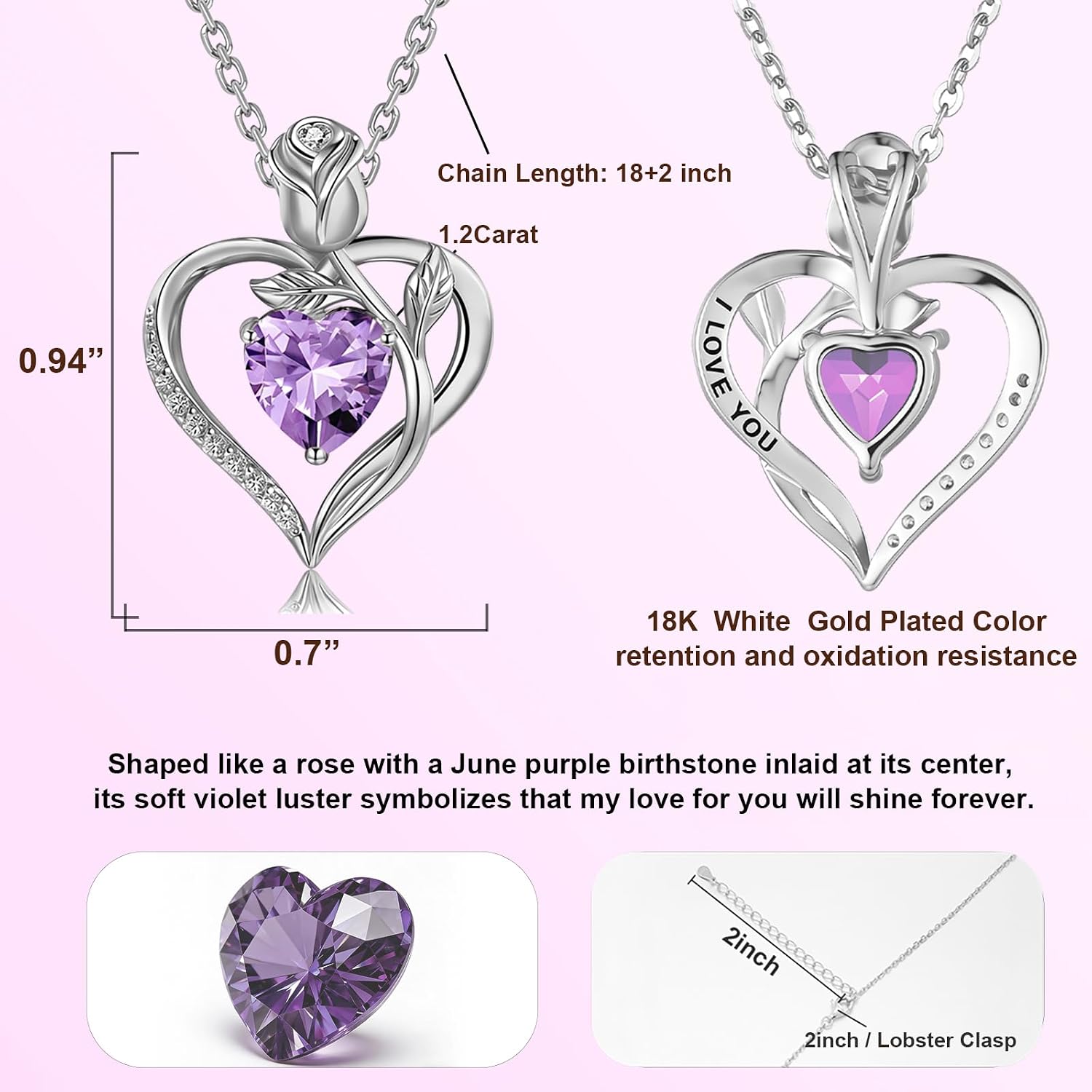
You’re browsing for a gift — maybe a birthday, maybe Mother’s Day — and you land on a heart-shaped pendant with a small colored gemstone representing the recipient’s birth month. It looks lovely in the photos. It’s sterling silver (an alloy of 92.5% pure silver and 7.5% other metals, most often copper, designated by the hallmark “925”), it’s under $100, and it ships in time. What could go wrong? Quite a bit, it turns out — but also nothing at all, if you know which details to interrogate before you buy. This guide unpacks what experienced gift-buyers and jewelry enthusiasts actually notice once a birthstone or heart pendant is in hand: the engraving they couldn’t read, the chain that snapped, the size that photographed bigger than it wore. By the end, you’ll have a clear decision framework whether you’re buying your first pendant or your fifth.
Why Sterling Silver Works — and Where It Doesn’t
Sterling silver sits in an interesting position in fine jewelry. The GIA notes in its consumer education materials that 925 sterling is durable enough for daily wear and takes a brilliant polish, but it oxidizes (darkens slightly) over time when exposed to air, skin oils, and moisture. That tarnishing concern is the reason so many buyers ask — sometimes multiple times in the same review thread — whether a sterling pendant will turn their skin green or cause irritation.
The short answer, and the one consistent pattern across aggregated buyer reviews for this category: properly hallmarked 925 sterling from reputable suppliers does not turn skin green for the overwhelming majority of wearers. The green-skin phenomenon is associated with high-copper alloys marketed as silver-toned (often “silver-plated” or unlabeled base metal), not with genuine sterling. Reviewers of sterling silver heart pendants consistently report no discoloration and no irritation, even with near-daily wear. The Knot’s gift guide reinforces this, noting that sterling is one of the most skin-friendly metals in the accessible price tier.
Where sterling does require attention: chain longevity under stress, tarnish on pieces stored in humid environments, and the interaction between rhodium plating (a common finishing step that adds brightness and tarnish resistance) and skin chemistry over the long term. Rhodium plating eventually wears; re-plating is inexpensive but adds a maintenance step most gift-recipients won’t anticipate.
By the Numbers
- 92.5% — minimum silver content required to carry a 925 hallmark (GIA)
- 6–18 months — typical interval before rhodium plating shows visible wear on frequently worn pieces (industry consensus cited in Brides’ pendant guide)
- 16–18 inches — the most common chain length shipped with heart pendants in this price tier; sits at the collarbone on most adults
The Chain Problem: When the Weakest Link Is Literally the Chain
If there is one recurring disappointment across the birthstone and heart pendant category, it is the included chain. Across aggregated reviews, the pattern is consistent: the pendant itself earns praise, and the chain earns either silence or mild criticism. At least one buyer of a lab-created diamond heart pendant noted she was already planning to purchase a separate chain before the original arrived. That’s a telling data point — the expectation of a subpar chain is now baked into the buyer calculus.
Why does this happen? At sub-$100 price points, manufacturers allocate most of the cost to the pendant. The chain is often a thin cable or box chain at 1–1.2mm width, which is technically wearable but does not match the visual weight of a substantive heart pendant. A moissanite rose heart pendant in this category earns specific praise for looking “more beautiful than the pictures” and — notably — for a chain that several reviewers report has not broken despite continuous wear. That durability detail stands out precisely because it bucks the category norm.
The practitioner decision rule here is simple: if the pendant is a gift for someone who will wear it daily — a teenager, an active adult, a grandmother who never removes her jewelry — budget an additional $15–30 for a 1.5–2mm cable or Singapore chain in 925 sterling from a dedicated chain supplier. A heavier chain also improves how the pendant drapes, reducing the tendency of lightweight chains to twist and rotate the pendant sideways.
If the recipient is a moderate or occasional wearer, the included chain is generally serviceable. The risk-to-annoyance ratio only tips negative for daily wear.
Engraving Legibility: The Detail That Can Disappoint
The LOUISA SECRET double-heart birthstone pendant illustrates a nuance that almost no product listing discloses: the “I love you” message engraved on the back is a genuinely meaningful detail that multiple reviewers praise as a thoughtful touch. But one reviewer’s note cuts through the sentiment — her elderly mother could not read it without help because the text is very small.
This is not a criticism of the product so much as a category-wide reality check. Laser engraving on small heart pendants — typically 12–18mm across — is physically constrained by the available surface area. Text that reads clearly to someone with unimpaired near vision and good lighting may be invisible to an older recipient without readers. The gem-facing side of a pendant this size offers perhaps 8–10mm of usable back surface after accounting for the bail (the metal loop through which the chain passes) and edge curvature.
Decision frame for engraved pendants:
- Recipient is under 50 with normal vision: engraved sentiment is a meaningful bonus.
- Recipient is 60+ or has noted vision changes: verify the engraving size in reviews before purchasing, or choose a pendant where the sentiment is the primary feature (larger text, higher-contrast finish) rather than a secondary one. Alternatively, let the gesture be the gift itself — the engraving doesn’t need to be read daily to carry meaning.
The broader lesson: the hidden details that delight younger buyers can inadvertently create friction for older recipients. Age-appropriate gift selection isn’t just about taste; it’s about legibility, clasp ease (lobster clasps are fiddly for arthritic fingers), and chain length (shorter chains ride higher and may feel tight on fuller necklines).
Moissanite vs. Lab-Grown Colored Gemstone: Choosing the Center Stone
For buyers who move beyond the pure birthstone category into moissanite or lab-grown colored stone pendants, the choice involves a genuine tradeoff worth naming explicitly.
Moissanite (silicon carbide, originally discovered in meteorite fragments, now produced entirely in labs) is the dominant choice in white-center heart pendants. The International Gem Society notes that moissanite has a refractive index of 2.65–2.69, higher than diamond (2.42), which produces its characteristic high-dispersion fire — the flashes of spectral color that some buyers love and others find “too rainbow-y.” Moissanite is colorless or near-colorless in its premium grades (Forever One by Charles & Colvard is the benchmark), extremely hard at 9.25 on the Mohs scale, and dramatically less expensive than natural diamond at equivalent size. In a heart pendant, the fire reads well because the shallow setting and ambient light maximize dispersion. Reviewers consistently describe moissanite rose heart pendants as looking more impressive in person than in listing photos — a reversal of the usual disappointment direction.
Lab-grown colored gemstones — including lab sapphires, rubies, emeralds, and the synthetic birthstones used in the traditional birthstone grid — offer a different proposition. They prioritize color saturation and emotional symbolism (a September sapphire for a September birthday) over brilliance and fire. Lab-created colored stones are optically and chemically identical to their natural counterparts; per GIA’s consumer guides, a lab sapphire is corundum in every meaningful sense. What they sacrifice is the natural origin story and the associated collector premium — neither of which matters at all in a sentimental gift context.
The if/then rule:
- If the buyer cares primarily about sparkle and “wow” impact, moissanite wins at this price tier.
- If the buyer cares primarily about personalization and birthstone symbolism, a lab-created colored gemstone is the correct choice — and the symbolism travels better across recipient ages.
- If the recipient is a jewelry enthusiast who will inspect the stone closely, understand that moissanite’s fire reads differently than diamond and set expectations accordingly.
Sizing a Heart Pendant for Everyday Wear vs. Statement Occasions
Pendant sizing is the detail buyers consistently get right in the reviews and consistently underweight in the purchase decision. Owners of pendants in the 12–15mm range (roughly the size of a thumbnail’s top third) describe them as “not too big, not too small” — the sweet spot for everyday wear across most adult body types. This size reads clearly in person, photographs well, and doesn’t snag on clothing or feel heavy at the end of a lightweight chain.
Statement-scale pendants — 20mm and above — require a heavier chain to balance visually and physically. They’re appropriate for occasional wear or for buyers who accessorize boldly, but they overwhelm fine chains and can feel costume-adjacent if the setting isn’t equally substantial.
For teenagers, the 12–15mm range is universally appropriate, and many teens prefer it smaller (10–12mm) for daily school wear. Oversized pendants read as more adult; that’s a positive or negative depending on the recipient and the family. Brides’ pendant guide recommends that buyers consider the recipient’s existing jewelry aesthetic before sizing up — someone who wears delicate stacked rings will usually want a delicate pendant to match.
Frequently Asked Questions
Will a sterling silver pendant necklace turn my skin green or cause irritation? Genuine 925 sterling silver does not cause green skin discoloration for most wearers. The green-skin reaction is associated with base metal or heavily copper-weighted alloys, not properly hallmarked sterling. Owners across this category consistently report no skin discoloration or irritation. If you or the recipient has known metal sensitivities, look for rhodium-plated sterling, which adds a barrier layer between the silver alloy and skin.
Is the included chain on a pendant necklace good enough to use, or should I buy a separate one? For moderate or occasional wear, the included chain is usually serviceable. For daily wear or for active recipients, a replacement 1.5–2mm sterling chain is a worthwhile upgrade — typically $15–30. The moissanite rose heart pendant is a noted exception: reviewers report its included chain has held up through continuous wear. But the category baseline for included chains is thin, so treat the pendant and chain as potentially separate decisions.
How large does the engraving on the back of the heart pendant actually appear — can older recipients read it? The “I love you” engraving on the LOUISA SECRET double-heart pendant is very small — meaningful to the touch and to younger eyes in good light, but one reviewer confirmed her elderly mother could not read it without assistance. If your recipient is older or has vision changes, verify engraving scale in reviews or choose a piece where the personal message is conveyed through the gift context rather than requiring the recipient to read micro-text.
What is the difference between choosing a moissanite center vs. a lab-grown colored gemstone in a heart pendant? Moissanite prioritizes brilliance and fire — it has a higher refractive index than diamond and produces impressive sparkle. Lab-grown colored gemstones prioritize color saturation and birthstone symbolism. Both are lab-created and offer excellent value. Choose moissanite for maximum visual impact; choose a lab-grown birthstone when personalization and meaning matter more than sparkle.
What size heart pendant looks proportional for everyday wear vs. a statement piece? 12–15mm is the everyday sweet spot cited most often by owners. It reads clearly, photographs well, and doesn’t feel heavy. Statement pendants start at 20mm and require a heavier chain to balance. For teenagers, 10–15mm is the appropriate range.
Is a birthstone heart necklace an appropriate gift for a teenager or only for adult women? Birthstone heart necklaces are widely appropriate for teenagers — the symbolism is age-inclusive and the sentiment reads as personal rather than precious. Size down slightly (10–12mm) for a younger recipient who prefers understated jewelry, and confirm the chain length accommodates school dress codes or activity gear. The category skews toward gifting across all ages; Mother’s Day and birthday purchases dominate, but teen birthday gifting is a strong secondary pattern in buyer review data.