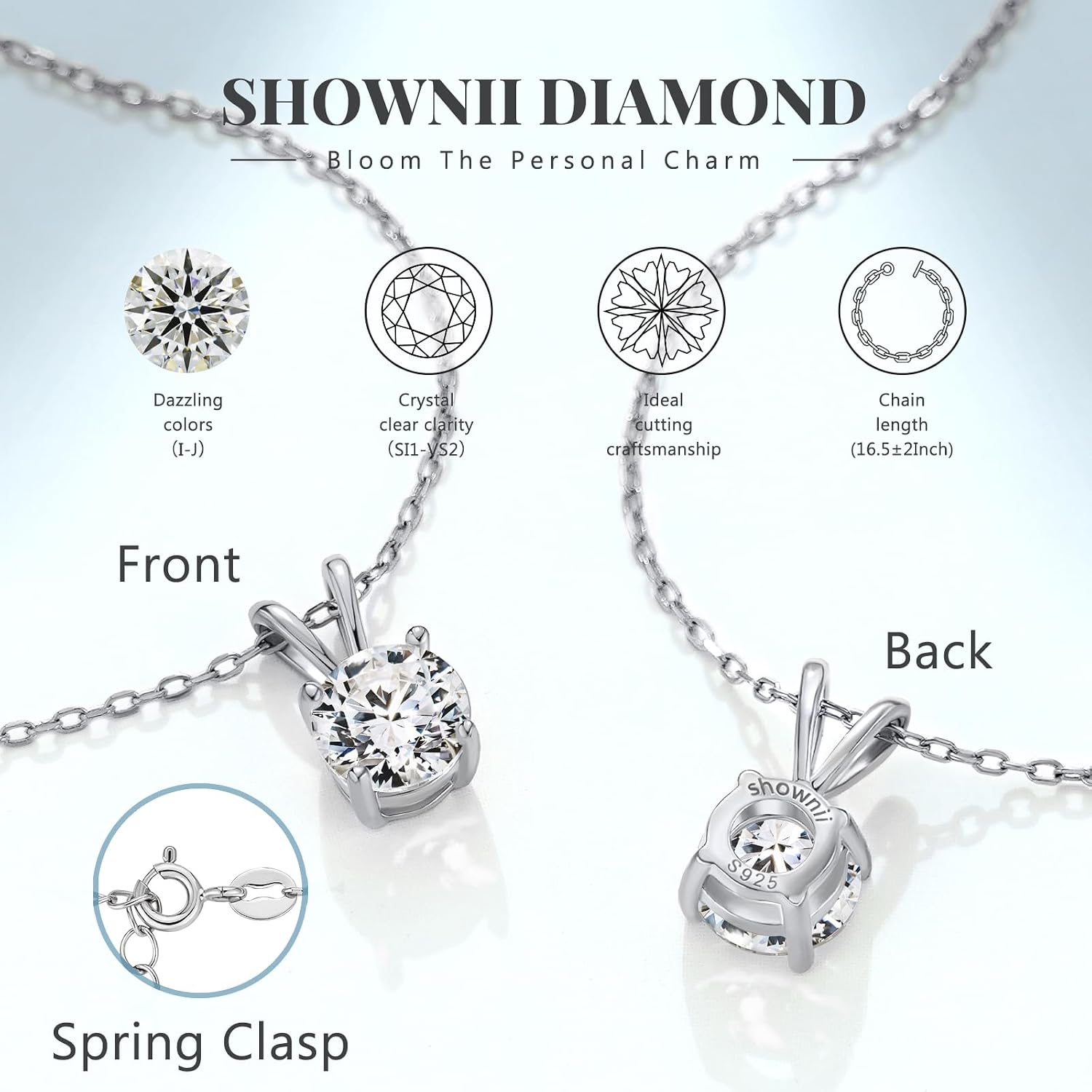
Picture this: you order a lab-grown diamond pendant necklace — a genuinely graded stone, real sparkle, legitimately impressive carat weight for the price — and when the box arrives, the diamond delivers. Then you pick up the chain and your heart sinks a little. It’s wispy. Almost invisible. The kind of thing that makes you instinctively reach for your reading glasses to confirm it’s actually there.
This is the defining experience of the lab-grown diamond pendant category right now, and it runs through buyer reviews like a throughline. A lab-grown diamond (one grown in a controlled environment using high-pressure or chemical-vapor-deposition technology, chemically identical to a mined diamond) can be a genuinely excellent value — real IGI or GIA grading, real optical performance, real provenance documentation. But the chains that ship with many of these pendants are an afterthought. Understanding that gap — and knowing when to do something about it — is what separates a confident buyer from one who returns a perfectly good diamond because the necklace “felt cheap.”
This guide will walk you through what the chain quality patterns actually mean, how to read carat size relative to your lifestyle, and how to make the upgrade decision with a clear framework.
| EDITOR'S PICK0.5 to 10 Carat 14K White Gold… | Mid-tierGILDED 1 CTTW Lab-Grown Diamond… | Budget pickBelacqua Lab Grown Diamond Pend… | |
|---|---|---|---|
| Metal | 14K white gold | Sterling silver / plated | Sterling silver |
| Carat Weight | 3.0 ct | 1 ct total | 1/2–2 ct |
| Diamond Color | E–F | — | G |
| Diamond Clarity | VS | — | SI |
| Earrings Included | ✗ | ✓ | ✗ |
| Price | $1,690.05 | $159.99 | $79.99 |
| See on Amazon → | See on Amazon → | See on Amazon → |
The Diamond-Chain Disconnect: What Review Patterns Tell Us
Across dozens of buyer reviews for popular lab-grown diamond pendant necklaces in the accessible price range (roughly $80–$400 at time of writing), the pattern is almost identical: the stone earns high praise, the chain earns polite frustration.
Reviewers consistently describe chains as “too thin,” “delicate,” and “flimsy” — language that keeps appearing regardless of brand. One particularly instructive pattern: a buyer who swapped their included chain and brought the pendant to a local jeweler reported that the jeweler specifically commented on the stone quality. That’s meaningful. The diamond was good enough to earn a working jeweler’s approval. The chain simply wasn’t built to match it.
The Gem Stone King pendant draws a specific secondary complaint worth flagging for anyone currently evaluating it: beyond the chain thinness, multiple reviewers flag the clasp as difficult to connect. For everyday wear — the segment this pendant is priced for — a clasp that requires two mirrors and a yoga instructor’s flexibility is a real usability problem, not just an aesthetic one. If fine motor dexterity is any concern (or if this is a gift for someone for whom it might be), note that usability complaint explicitly.
The Gilded three-stone vertical drop pendant surfaces a different issue: the pendant reads larger in product photography than it will appear in person. This is a known challenge in jewelry photography, where macro lenses and white backgrounds flatten spatial context. The stone itself may be excellent; the visual impression of size is the mismatch. Buyers expecting a statement piece and receiving what reads as an everyday piece are not getting a defective product — they’re getting a product that was under-contextualized in its photography.
What this means if you’re currently evaluating one of these:
- The diamond quality is largely what’s advertised. Don’t let chain frustration drive a return decision if the stone itself is performing.
- The chain is almost certainly a candidate for replacement. Budget $40–$120 for a replacement cable or box chain in 14K gold or solid sterling silver, depending on your metal preference.
- If the clasp is your complaint, a jeweler can often swap just the clasp for $15–$30 without replacing the full chain.
Carat Size vs. Visual Impact: The Illusion Architecture
Lab-grown diamonds have made half-carat and one-carat stones broadly accessible under $500 — a price point that would have required significant compromise five years ago. But carat weight and visual size are not the same number.
By the Numbers: Approximate table diameter by carat weight (round brilliant cut)
| Carat Weight | Approx. Diameter | Visual Read on Neck |
|---|---|---|
| 0.25 ct | ~4.1 mm | Delicate, subtle |
| 0.50 ct | ~5.2 mm | Classic everyday |
| 1.00 ct | ~6.5 mm | Statement-adjacent |
| 1.50 ct | ~7.4 mm | Clear statement |
(Source: GemSociety.org, ‘Diamond Size Chart and Carat Weight Guide’)
A few variables amplify or reduce perceived size significantly:
Setting style. A halo setting — where smaller accent diamonds ring the center stone — can make a 0.50 ct stone read visually closer to a 0.75–1.0 ct. The Gilded three-stone vertical drop leverages a related principle: stacking three stones vertically creates elongation that reads as larger than the individual stones’ weights suggest. When the pendant arrives and feels “smaller than the photo,” part of what’s happening is that the photograph showed the elongation effect clearly, but the in-hand scale wasn’t anchored to a reference object. Always check the millimeter measurements in product listings, not just the carat weight.
Chain length and neckline. Per Brides’ pendant buying guidance, a pendant sitting at the collarbone (roughly 16–18 inch chain) reads larger and more prominent than the same pendant hanging lower on a 20–22 inch chain, where it competes visually with more surface area of the chest.
Skin tone contrast. White metal settings (white gold, rhodium-plated silver) against lighter skin tones can make diamonds read slightly smaller due to reduced contrast. Yellow gold settings typically enhance perceived size through contrast. This is subjective, but it’s the kind of variable that explains why two buyers wearing identical pendants describe different visual impressions.
Decision rule:
- Everyday wear, professional setting, or layering with other necklaces: 0.25–0.50 ct in a clean solitaire or simple three-stone setting is the practical range.
- Gift or milestone piece meant to read as significant: go to 0.75–1.0 ct, or choose a halo or multi-stone design that amplifies a smaller center stone.
- Statement piece for events: 1.0 ct+ or a bold design element like a vertical drop that creates visual length.
The Chain Upgrade Decision: Framework for What to Actually Do
Here’s the honest chain math. Most lab-grown diamond pendants in the accessible segment ship with chains in one of three materials:
- Gold-filled sterling silver — a base metal (usually silver) with a pressure-bonded layer of gold. More durable than plating, but not solid gold.
- Gold-plated sterling silver (vermeil) — a thin electroplated gold layer over sterling silver. The most common and least durable option.
- Solid sterling silver — no gold, straightforward, durable, prone to tarnish.
Per GemSociety.org’s guide to gold-plating durability, vermeil and standard gold-plated settings will show wear at friction points — clasp connections, pendant bail contact — within 12–24 months of regular daily wear. The plating doesn’t fail catastrophically; it fades at edges. For a $100–$200 pendant necklace sold as a gift or occasional piece, this is acceptable. For everyday wear, it’s a timeline to plan around.
If you’re keeping the pendant and wearing it daily: A solid 14K gold chain ($80–$150 for a 16–18 inch cable or box chain at a local jeweler or reputable online retailer) is the correct upgrade. It will outlast any plated chain by years, it will match most pendant settings aesthetically, and it will hold resale or sentimental value independently of the pendant.
If this is a gift: The Gilded packaging and presentation has been specifically praised by reviewers for giftability — the unboxing experience is legitimately impressive relative to price point. Present it as-is. Note to the recipient (or tuck a card) that the chain is a candidate for upgrade if they plan to wear it daily. This is not a caveat that diminishes the gift; it’s honest care.
If the clasp is the problem: Before buying a new chain, visit a jeweler. A barrel clasp or lobster clasp replacement costs almost nothing and takes minutes. This is a $15–$30 fix that solves a discrete usability complaint without requiring a full chain purchase.
Does the IGI Certificate Cover the Chain? (And Other Practical Questions)
Frequently Asked Questions
Is it normal to replace the chain that comes with a lab diamond pendant necklace? Yes — and increasingly expected in this category. Jewelry retailers who specialize in the $500–$3,000 range routinely price pendants separately from chains for exactly this reason. When mass-market and accessible-price pendants bundle a chain, cost constraints push that chain toward the thinnest viable option. Replacing the chain is not a workaround for a defective product; it’s a normal part of treating the pendant as a permanent piece rather than a disposable one. Multiple reviewers in this category have done exactly this and reported being satisfied with the result.
What carat size pendant is right for everyday wear vs. a statement piece? For everyday wear, 0.25–0.50 ct in a clean setting is the conventional guidance — per The Knot’s jewelry trend and buyer guides, the “everyday fine jewelry” segment has normalized the half-carat solitaire as a wardrobe anchor. For statement use (events, occasions, pieces meant to register immediately), 1.0 ct+ or a design-amplified setting is the practical threshold.
Does the IGI certificate apply to the chain or just the diamond? The certificate applies only to the graded stone. Per IGI’s published scope documentation, laboratory grading reports cover the diamond’s 4Cs (cut, color, clarity, carat weight) and any relevant treatments or origin classification (natural vs. lab-grown). The chain, setting metal, and any accent stones that fall below grading thresholds are not covered. If you upgrade your chain or reset the stone, the certificate travels with the stone, not the mounting.
How do gold-plated sterling silver pendant settings hold up over time? With moderate daily wear, expect visible wear at friction points within one to two years, per GemSociety.org’s coverage of plating durability. The stone itself is unaffected — diamond hardness means it will not degrade. The setting prongs and bail may show base metal at contact points. A jeweler can re-plate settings for $20–$50 as needed, or you can transition the stone into a solid gold setting if the piece becomes heirloom-important.
Is a lab-grown diamond pendant necklace from Amazon a good gift? For the right recipient and occasion: yes, with calibration. The GIA’s lab-grown diamond overview confirms that lab-grown diamonds are chemically and optically identical to mined diamonds — this isn’t a novelty material, it’s a real diamond with a different origin story. The accessible price point means you can gift a genuinely impressive stone without an uncomfortable expenditure. The packaging on several of these pendants (particularly the Gilded set) is consistently praised as gift-ready. The calibration: manage expectations about chain durability, and consider including a note that the chain is upgradeable if the recipient plans to wear it daily.
The Bottom Line: Diamond First, Chain Second
The structural reality of this category is simple and worth stating directly. These pendants are built around a value proposition — real lab-grown diamond, real certification, accessible price — and the chain is where the margin compression shows up. That’s not a scandal; it’s a trade-off. The trade-off is worth it if you’re buying for the stone and willing to invest an additional $40–$150 in a chain that matches your wear habits.
If X, then Y:
- If you’re buying for occasional or gift use → keep the included chain, enjoy the presentation, and revisit if the recipient becomes a daily wearer.
- If you’re buying for daily wear → plan the chain upgrade into your budget from the start.
- If the clasp is frustrating → see a jeweler before returning anything; it’s a $15 fix.
- If the size reads smaller than expected → check the mm dimensions in the listing against the carat/size chart, and consider a halo or multi-stone design next time to maximize visual impact.
The diamond in these pendants is doing its job. The rest is logistics.