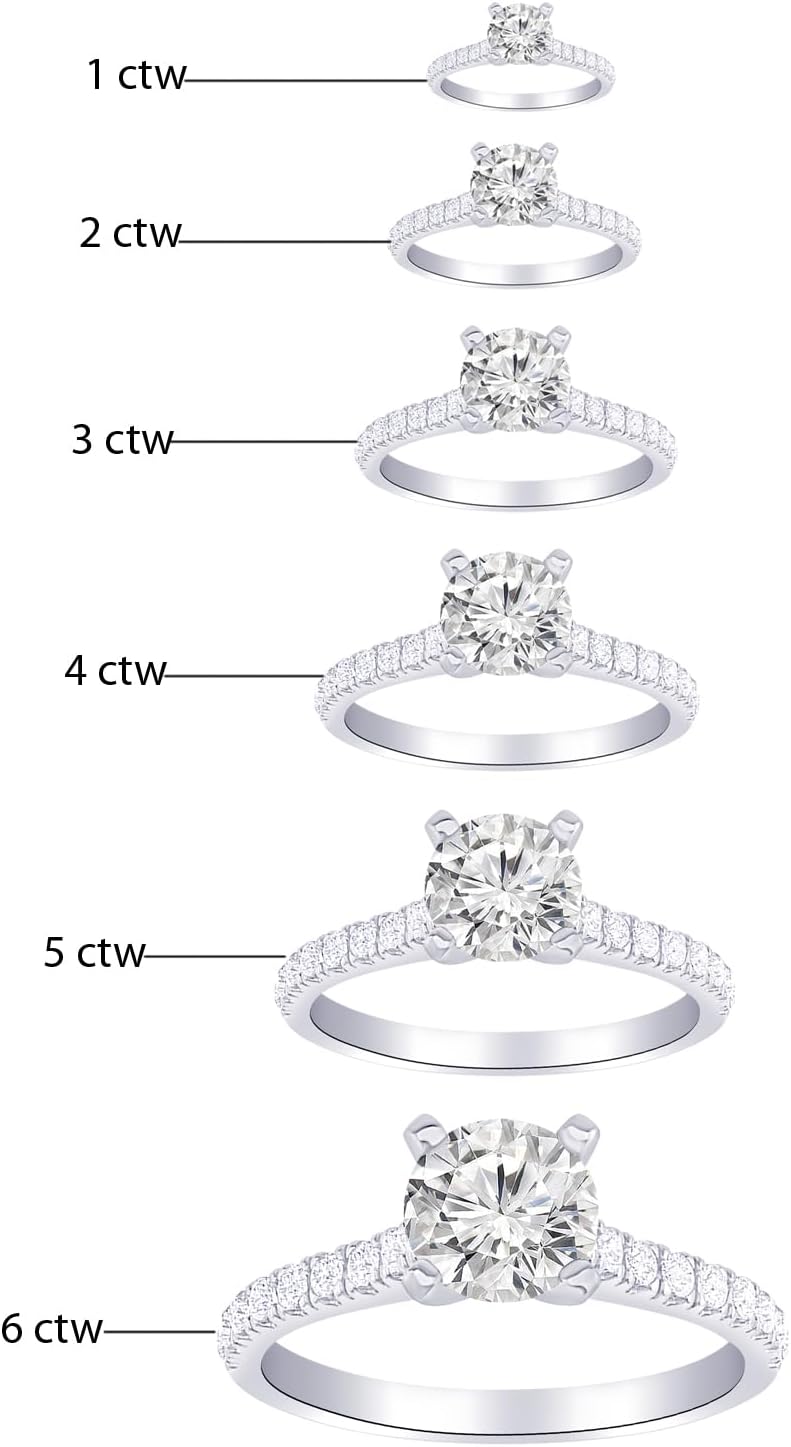
You’ve found a lab-grown diamond solitaire engagement ring on Amazon. It has an IGI certificate number in the listing — IGI stands for the International Gemological Institute, one of the two most respected independent gemstone grading labs in the world, alongside GIA (the Gemological Institute of America). The price is a fraction of what a comparable natural diamond ring would cost at a traditional jeweler. Prime shipping is available. And the reviews are oddly moving — full of proposal stories, anniversary surprises, and the kind of detail you only get from someone who has been wearing a ring every single day for eight months.
This article is for the buyer who has already passed the “is lab-grown real?” question and is now asking the harder ones: Is this specific ring worth buying? What do owners find out after the novelty wears off? Where does Amazon fall short in ways that matter for a once-in-a-decade purchase? We’ve analyzed aggregated buyer reviews, consulted grading documentation from GIA and IGI, and cross-referenced community findings from Pricescope and The Knot’s 2025 Engagement Ring Trends Report to build a clearer picture than any single listing can offer.
| EDITOR'S PICKHouston Diamond District 1.6 Ca… | Mid-tierHouston Diamond District 1 to 5… | Budget pickHouston Diamond District 1-6 Ca… | |
|---|---|---|---|
| Center cut | Marquise | Oval | Round |
| Carat weight | 1.6 ct | 1 ct | 0.5 ct |
| Diamond type | Natural | Lab-grown | Lab-grown |
| Color grade | G-H | D-E | E-F |
| Metal | Yellow gold | White gold | White gold |
| Price | $2,899.29 | $1,018.98 | $559.59 |
| See on Amazon → | See on Amazon → | See on Amazon → |
What the Long-Term Reviews Actually Say
The review pool for lab-grown diamond solitaire engagement rings on Amazon skews emotionally honest in ways the moissanite category doesn’t. These are overwhelmingly real proposals, real anniversaries, real vow renewals — and buyers who have something at stake tend to write reviews that are more specific and more candid.
What owners keep praising: The thin band design that appears across most best-selling solitaire listings generates consistent delight. Reviewers describe it as “delicate,” “feminine,” and — critically — comfortable for daily wear in a way that heavier settings aren’t. One pattern that surfaces repeatedly: buyers who sized up for a comfortable fit report the thin profile keeps even a half-size-larger ring from sliding excessively. The stone itself earns praise for brilliance at first glance, and several reviewers with jewelry backgrounds note the ring photographs better than rings costing significantly more.
The durability question that nobody can fully answer yet: That same thin band generates a quieter current of concern. Reviewers who are three to six months into daily wear note they “haven’t had a problem yet” in a tone that implies they’re monitoring the situation. At 12 to 18 months, a smaller number of reviews flag minor bending or reshaping at the band — particularly in sizes above 7, where the circumference amplifies leverage on the metal. The honest summary: the thin band is a genuine aesthetic advantage and a genuine long-term question mark. Pricescope community discussions on band width and durability consistently put the threshold for worry at bands under 1.6mm in width and under 1.4mm in thickness for everyday wear. Many of the Amazon solitaire listings don’t publish these measurements prominently. If you’re buying, ask the seller directly or check the spec table carefully.
The “placeholder that became the real ring” pattern: This is the most instructive buyer behavior in the category. A non-trivial number of reviewers describe purchasing a lab-grown solitaire as a stand-in — something to propose with while shopping for a “proper” matched set or a natural diamond upgrade later. Several of those same buyers report, months later, that the upgrade never happened. Not because of budget constraints, but because the fiancée no longer wanted to replace the ring that held the actual memory of the proposal. One reviewer describes his fiancée’s exact words: she didn’t want a ring that had never been on her finger for the moment that mattered. This is worth sitting with if you’re considering the placeholder strategy.
Shipping failures are relationship-level disasters in this category. Negative reviews in the lab-grown solitaire space are disproportionately not about the ring — they’re about the box arriving after the anniversary dinner, after the planned proposal trip, or on the wrong day entirely. One particularly detailed review describes a FedEx delay that meant a ring meant to be presented at a specific family gathering arrived three days later. The ring itself received five stars in the review. The experience received one. Amazon’s Prime delivery estimate and actual carrier performance are two different things, especially for signature-required jewelry shipments.
The Certification Question: IGI on Amazon vs. IGI Anywhere Else
A legitimate concern from first-time buyers: is an IGI certificate attached to an Amazon listing as credible as the same IGI certificate from a local jeweler or a specialist online retailer?
The answer, according to IGI’s official grading documentation, is yes — with one important caveat. The certificate number on the listing should be verifiable directly on IGI’s website. If you can enter that report number on igi.org and pull up the matching stone’s graded characteristics (carat weight, cut, color, clarity, fluorescence), the certificate is legitimate regardless of where you bought the ring. What varies is not the certificate’s authenticity but the seller’s accuracy in transcribing the graded stone into the listing. A small number of Amazon returns in this category result from buyers who find the listed color grade or clarity grade doesn’t match what they receive — a discrepancy that’s only catchable if you verify the certificate number before accepting delivery.
GIA’s consumer education resource on lab-grown diamonds notes that grading consistency between labs has improved substantially since 2022, and that IGI’s lab-grown grading is widely considered reliable for the commercial market. The GIA/IGI comparison matters most at the high end of the natural diamond market; for lab-grown diamonds in the solitaire engagement ring category, IGI certification is the industry standard, and an Amazon listing carrying a genuine, verifiable IGI report is not a second-class product by virtue of its channel.
The Color Grade Decision: D–E vs. G–H in a Round Solitaire
By the numbers:
- D–E color lab-grown diamond: typically 15–25% price premium over G–H at equivalent cut and clarity in the 1.0–1.5ct solitaire range (Brides, 2025 lab-grown diamond pricing survey)
- G–H color: “near colorless” on GIA/IGI scale — no visible yellow tinge to the naked eye in most lighting conditions
- D–F: “colorless” — meaningful to trained eyes under controlled lighting; rarely distinguishable from G–H in a ring setting at arm’s length
Here’s the counterintuitive practitioner note: a diamond industry professional with 12 years in the field, now practicing medicine, left a detailed review on a companion solitaire listing noting that a very slight warmth in a real diamond is actually an authenticity signal for buyers who know what they’re looking at. That observation cuts against the reflexive “buy the highest color grade” instinct. In a lab-grown solitaire sold in a yellow or rose gold setting, the color-grade premium for D–E over G–H is genuinely difficult to justify visually. In a platinum or white gold prong setting, the case for E–F is modestly stronger — white metal reflects into the stone and makes warmer tones more visible.
The Knot’s 2025 Engagement Ring Trends Report finds that G–H color in lab-grown round solitaires represents the largest share of sales by unit volume, suggesting most buyers who’ve done the research land in that range. If you’re buying for a setting you know will be white metal, consider F–G as a practical middle position.
Amazon vs. James Allen at the Same Price Point
This is the comparison buyers actually want to see. At equivalent price — say, a 1.25ct round lab-grown diamond solitaire with IGI certification in the $800–$1,400 range as of May 2026 — what do you actually get differently?
Amazon advantages: Frictionless returns (for eligible sellers), Prime delivery speed, and a review ecosystem that gives you real buyer intelligence. The aggregated review volume on a bestselling Amazon solitaire listing can genuinely surface durability and sizing patterns that a newer retailer’s review count can’t.
James Allen advantages: 360-degree video of the actual stone you’re buying before purchase. The ability to verify cut quality through light-performance imagery. Human gemologist chat available for pre-purchase consultation. Comprehensive ring builder that lets you select stone and setting independently. A dedicated engagement ring purchase flow designed around the emotional gravity of the decision — including the option to see the stone’s actual light performance under magnification, not just a stock photo.
The practical decision rule: if you’re comfortable buying the ring from the listing description and certificate number alone — and the ring style you want happens to be available on Amazon at a competitive price — the channel itself is not disqualifying. If you want to see the actual stone before it ships, Amazon cannot offer that. The James Allen model exists precisely because a meaningful share of buyers will not feel confident committing without that visual verification step.
Frequently Asked Questions
Is an IGI certificate from an Amazon engagement ring listing as legitimate as one from a local jeweler? Yes, if the certificate number is verifiable on igi.org. The grading lab’s assessment doesn’t change based on the retail channel. Verify the report number matches the listed specifications before accepting the package.
How thin is “too thin” for an engagement ring band worn every day? Pricescope community discussions and jeweler guidance consistently flag bands under 1.6mm wide or 1.4mm thick as candidates for deformation under daily wear, especially in larger ring sizes. Many Amazon listings don’t publish these measurements in the title — check the product specifications table or contact the seller before ordering.
What happens if my ring is lost or damaged — does the certification help with insurance? Yes, materially. An IGI or GIA certificate establishes the stone’s graded specifications, which an independent appraiser uses to assign a replacement value. Without documentation, insurers may undervalue the stone significantly. Many jewelry insurance policies (Jewelers Mutual is the most widely cited standalone option) require a graded report for scheduled coverage of stones above a given value. Keep a digital copy of the certificate separate from the physical ring.
Is it worth spending more for D–E color over G–H color in a round solitaire? For most buyers, in most settings, no. G–H is genuinely colorless to the naked eye at arm’s length. The premium for D–E in lab-grown diamonds, where supply is not constrained, rarely translates into visible difference once the stone is set. Exceptions: platinum or white gold knife-edge settings, and buyers who know the ring will be closely examined by people with diamond knowledge.
Will Amazon guarantee delivery in time for a proposal or anniversary if I order with Prime? Amazon provides estimated delivery windows; it does not guarantee them for jewelry requiring signature confirmation. Carrier delays — particularly with FedEx for high-value shipments — are the single most consistent source of negative reviews in this category. Order a minimum of 10 days ahead of your date. Do not rely on two-day shipping for a time-sensitive occasion.
What’s the real difference between a lab-grown diamond engagement ring on Amazon and one from James Allen at the same price? The diamond grading is comparable if both carry legitimate IGI or GIA reports. The difference is the buying experience and stone visibility. James Allen lets you see 360-degree video of the specific stone before purchase; Amazon shows you stock photography. For buyers who want to verify the actual light performance of the stone they’re committing to, that gap is the decision.
The clear decision rule: if the ring style is available with a verifiable IGI certificate, the band dimensions clear the daily-wear durability threshold, and you can order with at least 10 days of buffer before the occasion — Amazon is a legitimate channel for a real engagement ring. If you need to see the specific stone before you commit, or if the proposal date is within the week, the specialist retailer model exists for exactly those conditions.