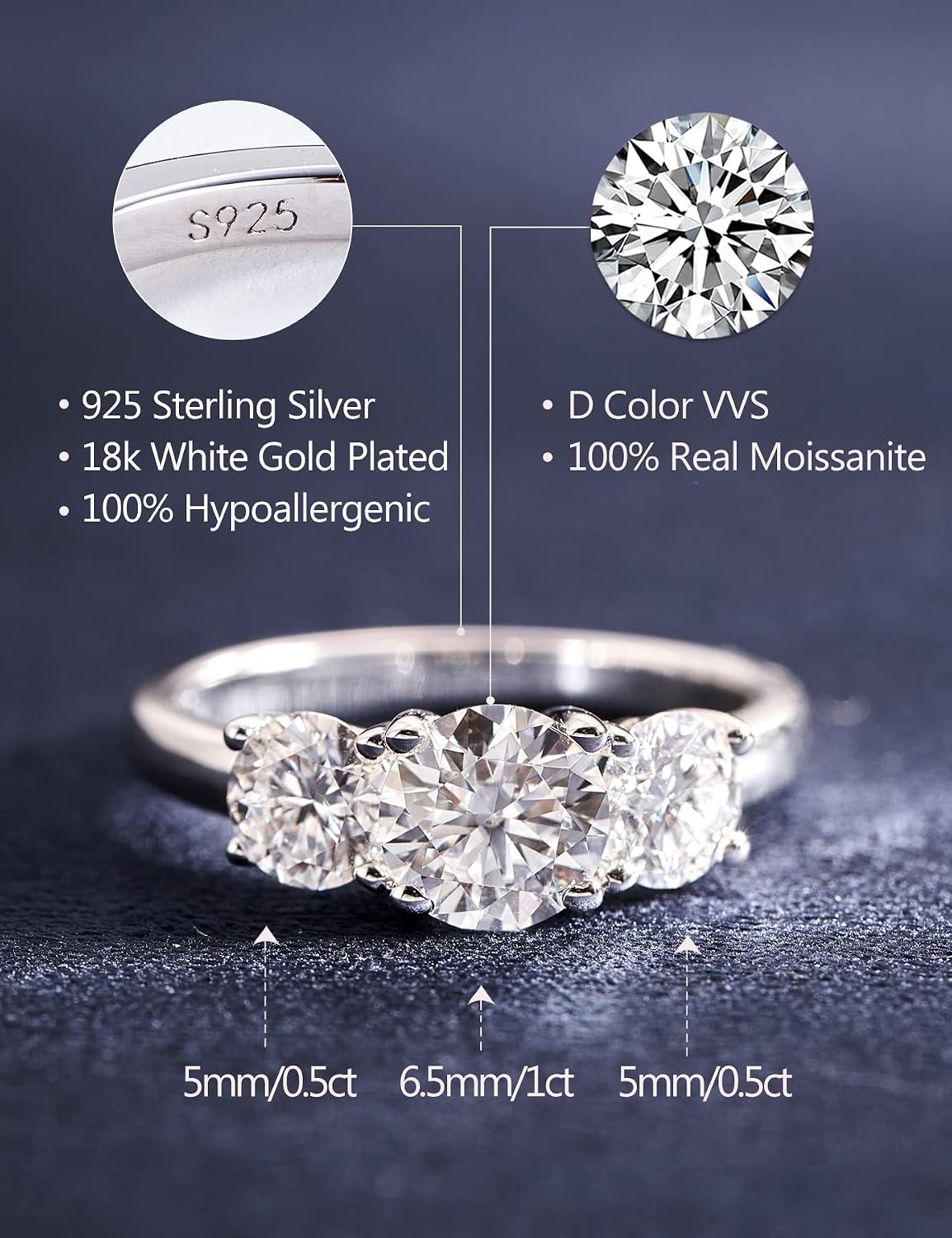
Imagine you just got engaged, you love your solitaire, and now you’re staring at the eternity band section of a website at 11 p.m. wondering: do I want stones all the way around, or just on top—and will this thing even fit in six months? If that’s you, you’re in the right place. An eternity band is a ring with gemstones set continuously around all or part of the band, worn alongside an engagement ring or as a standalone wedding band. Moissanite (moy-SAN-ite) is a lab-created gemstone with near-diamond brilliance at a fraction of the cost—per the Gem Society’s overview at gemsociety.org, it scores 9.25 on the Mohs hardness scale, making it genuinely tough enough for everyday wear. This guide cuts through the format confusion, addresses the sizing trap that catches most buyers off guard, and gives you an honest read on metal quality—because one viral review about a band turning black in a pool tells you more than a spec sheet ever could.
| EDITOR'S PICKLab Grown Diamond Wedding Bands… | Mid-tierIMOLOVE Moissanite Wedding Band… | Budget pickWES 1.5/1.8/2.0mm Moissanite We… | |
|---|---|---|---|
| Stone | Lab Diamond | Moissanite | Moissanite |
| Metal | 14K Plated Silver | White Gold Plated | 925 Sterling Silver |
| Stone Shape | Marquise | — | Round |
| Setting Style | Eternity | 3 Stone / Eternity | Half Eternity |
| Band Width | — | — | 1.5mm |
| Sizes | 5–10 | 4–11 | 4–11 |
| Price | $159.99 | $59.99 | $36.99 |
| See on Amazon → | See on Amazon → | See on Amazon → |
Half Eternity vs. Full Eternity: The Tradeoff Is More Practical Than Aesthetic
Most buyers fixate on how these two formats look. The smarter question is how they live.
A full eternity band has stones set continuously around the entire circumference of the ring. That delivers unbroken sparkle from every angle—genuinely stunning in photos, and especially striking when the hand is in motion. The Knot’s eternity band guide notes that full eternity bands are considered the more traditional “forever” symbol precisely because there’s no beginning or end to the stone line. The tradeoff: those pavilion-side stones (the bottom half you never see) are exposed to friction, soap residue, and impact every single day. They’re also what make sizing a full eternity band so unforgiving—with stones running the full 360°, you can’t resize the ring without removing, repositioning, or replacing stones, and many jewelers won’t touch them at all.
A half eternity band places stones only across the top arc of the ring—typically 180° or slightly less. The IMOLOVE half-eternity band is a good case study here: owners consistently report that because the stones sit only on top, the band lies flat and comfortable against the palm, and there’s no prong or bezel edge digging into the finger from beneath. That’s not a trivial comfort detail when you’re wearing this ring every day for decades. The other upside reviewers keep coming back to: sizing flexibility. Because the shank (the plain metal part) wraps the lower half, a jeweler has clean metal to work with and can resize within a range—usually ±1 full size—without disturbing the stone setting.
The decision rule is simple: if you have any uncertainty about your long-term ring size (pregnancy, weight fluctuation, lifestyle changes), a half eternity band is the safer bet. If you are confident in your size and want maximum visual impact, a full eternity is worth the commitment—but treat the size as permanent.
Sizing Reality: Why You Should Probably Go Half a Size Up
This is the part of eternity band buying that bites the most people, and it’s not intuitive.
When a continuous row of stones runs across the top of your finger, those settings add physical height and, more importantly, friction. Your finger has to slide past not just metal but a series of bezel or prong edges. The practical result: eternity bands almost always feel tighter than a plain band in the same stamped size.
By the numbers:
| Band Type | Typical Sizing Adjustment | Resize Feasibility |
|---|---|---|
| Plain metal wedding band | True to size | Easy (±2 sizes) |
| Half eternity (stones on top) | Size up ½ | Moderate (±1 size on plain shank) |
| Full eternity (stones all around) | Size up ½ | Very limited or not possible |
Reviewers for the IMOLOVE half-eternity band specifically flag this: going a half-size up produced a comfortable daily-wear fit even for fingers that run slightly larger in warm weather. This is consistent with sizing guidance published in Brides’ eternity band coverage, which recommends ordering based on your largest expected finger measurement—typically later in the day and in warmer months—and then factoring in the additional friction of the stone setting.
If you’re stacking your eternity band against an engagement ring, there’s one more variable: the profile of the engagement ring’s shank. A cathedral or high-profile solitaire creates a gap that actually gives the eternity band room to sit lower and feel looser; a low-profile or flush-set solitaire means the two rings press together, making both feel tighter than expected. Measure with your engagement ring on when you size.
Metal Quality and Long-Term Wear: The Pool Story You Need to Hear
There’s a buyer review circulating for the IMOLOVE lab diamond band that deserves more attention than it gets. A buyer reports taking the ring on a pool trip—one session in chlorinated water—and watching a white-gold-dipped moissanite band turn black. The ring came back from the pool discolored, and the buyer switched specifically to a higher-karat gold option afterward.
This is not a freak incident. It’s chemistry.
White gold plating (rhodium) is the industry-standard finish for white metal rings. Pure rhodium is a platinum-group metal that gives white gold its bright, mirror-like appearance—but it is a surface coating, not the base metal. As Pricescope’s moissanite forum discussions regularly surface, rhodium plating wears through over 12–24 months of daily wear under normal conditions. Chlorine dramatically accelerates this. Pool water, hot tubs, and even certain cleaning products can strip the rhodium layer in a single exposure, exposing the yellow or rose hue of the underlying gold alloy.
If long-term metal integrity matters to you—and it should, for a ring you’re wearing daily—here’s how to think through your options:
- Gold-plated over sterling silver: Lowest entry price; plating will wear, silver beneath can tarnish or react with skin chemistry. Reviewers replacing plated bands consistently mention turning or discoloration within 1–2 years of daily wear.
- 10K or 14K solid gold: The base metal is durable gold alloy all the way through. Rhodium top coat on white gold will still need occasional replating, but the underlying metal is stable. No blackening from chlorine.
- Platinum: Naturally white, no plating required, denser and heavier than gold. Scratches develop a patina rather than material loss. Highest initial cost; considered the best long-term wear metal by jewelers working with bridal pieces.
The marquise lab diamond eternity band reviewed by buyers is specifically praised for the quality of the gold shine—owners note it reads as genuinely bright and warm, not flat or thin. That’s the difference between a solid gold alloy ring and a plated one: the color comes from the material itself, not a surface coating burning off.
If you swim, garden, or work with your hands daily: solid gold or platinum is not a luxury—it’s a maintenance decision that saves you money over five years.
Stacking, Placeholders, and the Lab Diamond vs. Moissanite Question
Stacking With an Existing Ring
Stacking a moissanite eternity band with a lab diamond engagement ring is one of the most common configurations buyers are navigating right now, and it works better than the mismatch anxiety would suggest. Moissanite’s refractive index (2.65–2.69, per GIA’s moissanite overview) is actually higher than diamond’s (2.42), meaning moissanite throws more colorful fire—the rainbow flash you see in candlelight. Diamond has more white brilliance. Side by side, the two stones look slightly different under direct comparison, but in a stack on the hand, most buyers report the combined effect is beautiful rather than discordant.
The key variable is color grade. Modern moissanite is produced in near-colorless (DEF equivalent) and colorless grades. Paired with a colorless lab diamond in G–H range, the visual difference is minimal. Paired with a lower-color lab diamond, moissanite’s slightly warmer fire can actually complement rather than clash.
The Placeholder Band Pattern
The WES moissanite band highlights a buyer behavior worth naming directly: purchasing an eternity band as a placeholder while still deciding on a permanent piece. This is smarter than it sounds. A mid-range moissanite band lets you live with the profile, width, and stone style before committing several thousand dollars to a permanent piece. You learn whether you want 2mm or 3mm width, whether pavé reads as sparkly or too busy at your ring size, and whether your daily lifestyle is harder on jewelry than you expected.
If you’re in placeholder mode: prioritize comfort and fit over metal longevity. A solid sterling silver or lightly plated band at lower cost gives you six months of real data.
Is the Lab Diamond Premium Worth It?
The lab diamond eternity bands in this category run at a meaningful premium over moissanite for the same visible stone size. Here’s the tradeoff in plain language:
- Moissanite: More fire, lower cost, excellent hardness (9.25 Mohs), slightly different sparkle character than diamond. The Gem Society notes it’s a genuine gemstone in its own right, not a simulant.
- Lab diamond: Chemically identical to mined diamond (10 Mohs), graded by IGI or GIA on the same 4Cs scale, lower fire than moissanite but higher white brilliance. Premium is real but has compressed significantly since 2022 as lab supply increased.
If X, then Y: If the ring is a standalone band and budget flexibility exists, lab diamond reads as “diamond” to every observer and will satisfy a traditionalist. If you’re stacking under a moissanite solitaire, stay consistent and go moissanite—the fire will match and the price savings are real.
Frequently Asked Questions
Should I size up for a moissanite eternity band? Yes, almost universally. A half-size up from your normal ring size accounts for the additional friction of the stone settings. Size with your engagement ring on if you plan to stack.
What is the difference between half eternity and full eternity for everyday wear? Half eternity bands have stones only on the top arc; the plain metal shank wraps underneath. This makes them more comfortable for daily wear, easier to resize, and gentler on the finger. Full eternity bands have stones all the way around—more dramatic, but harder to resize and slightly less comfortable for active hands.
Will a gold-plated moissanite band tarnish or turn green? A plated band over sterling silver can discolor with prolonged chlorine exposure, sweat, or skin chemistry. The rhodium or gold plating wears through over time, exposing the base metal beneath. Solid gold (10K, 14K, 18K) eliminates this risk; platinum eliminates it entirely.
Can I stack a moissanite eternity band with a lab diamond engagement ring? Yes. The visual difference is subtle rather than jarring, especially in near-colorless grades. Many buyers find the higher fire of moissanite adds dimension to the stack rather than competing with it.
Is a lab-grown diamond eternity band worth the premium over moissanite? It depends on your priority. Lab diamond has higher hardness, grades on standard diamond scales, and reads as “diamond” to any observer. Moissanite offers more colorful sparkle at lower cost. For a buyer who values the diamond designation and resale narrative, lab diamond is worth the premium. For a buyer optimizing for visual impact per dollar, moissanite is the stronger argument.