Imagine you’ve found a moissanite solitaire that looks genuinely stunning in the product photos — bright, clean, full of the rainbow-flash fire that moissanite is known for. The price is right. But then you notice the listing says “925 sterling silver” band, and a voice in the back of your head wonders: Is this going to survive actual life? That question is the right one to ask, and it doesn’t have a single answer — it has a conditional one. Whether sterling silver, 10K gold, or 14K gold is the correct choice depends on how you’ll wear the ring, what “durability” means to you personally, and how much ongoing maintenance you’re willing to do. This article walks through the honest trade-offs, drawing on published metal-science data from the International Gem Society’s Metal Hardness and Ring Durability Guide, gemstone data from the Gemological Institute of America’s moissanite materials reference, and aggregated owner reports from the PriceScope community’s moissanite wear report threads, so you can make the call with your eyes open.
| EDITOR'S PICK10k white gold 1.0 CT Classic 6… | Mid-tierSterling Silver 4-Prong Petite… | Budget pickIMOLOVE Solitaire Moissanite En… | |
|---|---|---|---|
| Metal | 10K White Gold | Sterling Silver | 925 Silver + 18K plate |
| Stone | Moissanite or Sim. | Sim. or Moissanite | Moissanite |
| Setting | 6-Prong | 4-Prong | Halo |
| Stone Size | 1.0 CT | 1.0 CT | 1 CT |
| Stone Quality | — | — | D Color, VVS1 |
| Side Stones | Graduated side stones | Twisted vine design | Halo |
| Price | $256.99 | $57.99 | $54.99 |
| See on Amazon → | See on Amazon → | See on Amazon → |
What the Metals Actually Are — and Why It Matters for Daily Wear
Before comparing, a quick grounding in what these terms mean in practice.
Sterling silver (marked 925) is 92.5% pure silver alloyed with copper and other trace metals. It is the softest of the three options discussed here. On the Mohs hardness scale — a standard measure of scratch resistance where diamond sits at 10 — silver rates around 2.5–3. That means your ring will pick up surface scratches from ordinary objects faster than gold alloys will. Sterling silver also oxidizes readily in humid environments or when exposed to chlorine and sulfur compounds found in lotions and cleaning agents. This produces the characteristic darkening — tarnish — that most people associate with silver jewelry. According to the International Gem Society’s Metal Hardness and Ring Durability Guide, sterling silver’s tarnish rate is significantly higher than that of gold alloys regardless of karat.
10K gold is 41.7% pure gold alloyed heavily with copper, silver, zinc, and palladium. The high alloy content makes 10K harder and more scratch-resistant than 14K, but also more prone to slight color variation over years of wear as base metals migrate. It carries a lower price point than 14K and is a legitimate fine-jewelry metal in the United States, though some international markets set their minimum fine-jewelry threshold differently, and 10K rings may carry less resale recognition abroad.
14K gold is 58.3% pure gold. It sits at the practical sweet spot that The Knot’s Engagement Ring Metal Guide identifies as the most popular karat for American engagement rings: hard enough to resist daily wear, pure enough for very low nickel-sensitivity risk, and priced within reach for most fine-jewelry budgets. White, yellow, and rose 14K options all share this composition; the color comes from the specific alloy blend, not from a coating.
A critical distinction applies to silver rings marketed with “18K white gold plating”: that plating is an extremely thin flash of rhodium or gold deposited on the silver surface. It will wear through. More on that in the FAQ section below.
Metal Comparison by Tier
The three metal options map cleanly onto three buyer situations. The comparison below names each tier explicitly so you can locate yourself before reading further.
Sterling Silver 925 — The Budget-Accessible Entry Point
Sterling silver moissanite solitaires occupy the most accessible price tier. The stone performance in a quality 925 setting is essentially identical to what you would get in a more expensive setting — moissanite cut quality is stone-dependent, not metal-dependent. The Gemological Institute of America’s moissanite materials reference confirms that moissanite rates 9.25 on the Mohs hardness scale, making it among the hardest gemstone materials in production use and fully appropriate for daily wear regardless of the metal surrounding it.
The honest trade-off is maintenance. Sterling silver in continuous daily wear requires polishing every two to four weeks to prevent visible tarnish. Prongs require more frequent inspection than gold prongs in environments involving repeated physical contact. If the ring has an 18K white gold flash coating, expect that surface layer to wear through within six to eighteen months at high-contact points, requiring replating.
Owner reports aggregated in PriceScope’s moissanite community wear threads show that nurse reviewers wearing sterling moissanite solitaires through hospital shifts for six or more months consistently report the stone holding its sparkle and clarity without issue. The stone is not the weak link. The band is.
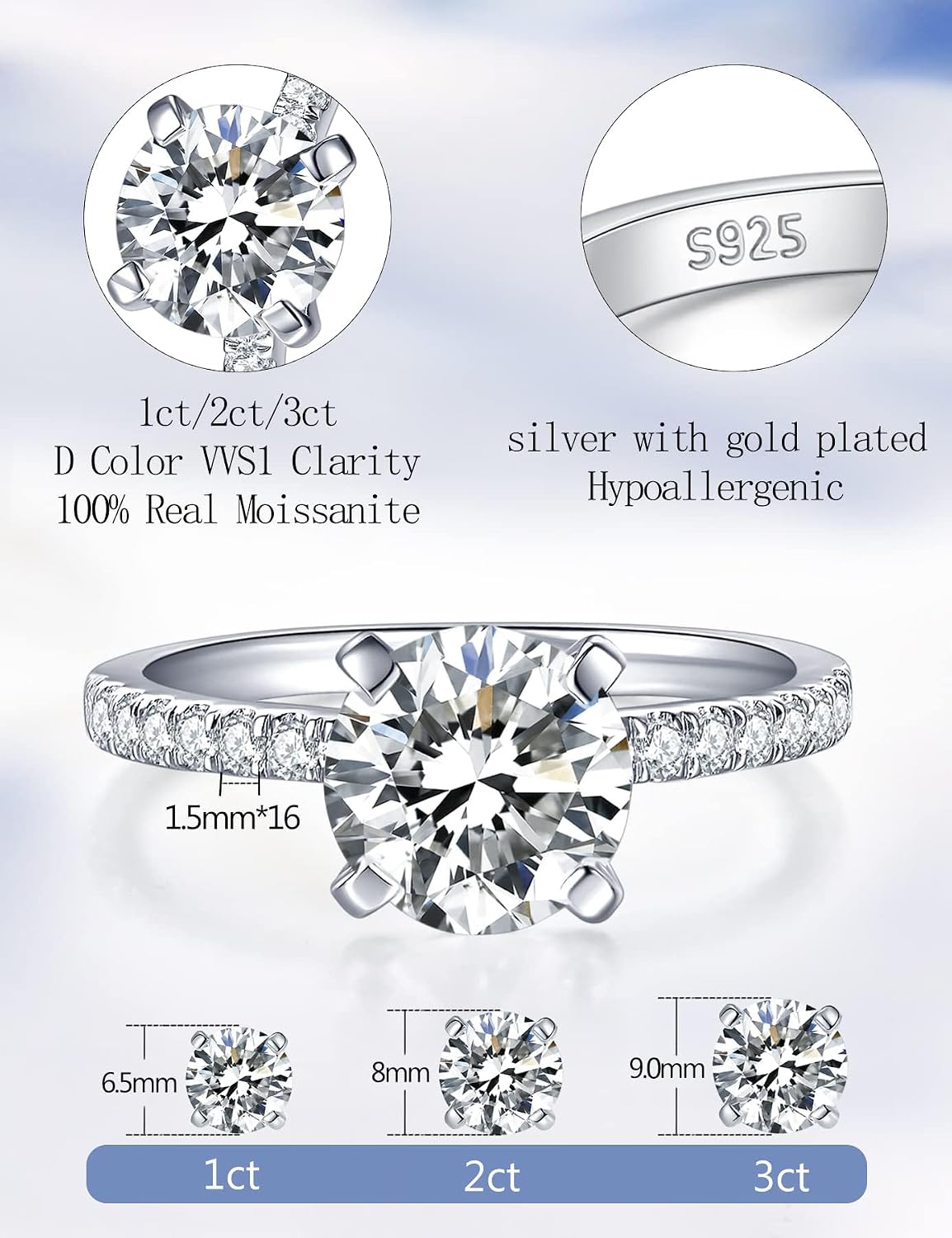
IMOLOVE
$54.99
In stock on Amazon
Check price on Amazon10K Gold — The Hardness-Forward Middle Ground
10K gold at 41.7% pure gold is technically harder than 14K gold because its higher proportion of base-metal alloys resists surface deformation more aggressively. That hardness advantage is real but modest in ring applications: the International Gem Society’s Metal Hardness and Ring Durability Guide notes that the practical wear difference between 10K and 14K in a ring setting is small enough that most wearers will not perceive it over a typical ownership period.
Where 10K earns its place is budget. A 10K moissanite solitaire crosses the threshold from silver maintenance cycles (polishing, replating) into gold-tier tarnish resistance at a lower cost than 14K. Tarnish risk drops to very low. Prong stability improves. The ring reads as fine jewelry in most domestic and international markets, though hallmarking recognition varies.
The one flag worth naming: 10K alloys frequently use nickel as a hardening agent in higher proportions than 14K alloys do. For nickel-sensitive wearers, this matters. Confirm the alloy composition with the vendor before purchasing a 10K white gold option specifically.
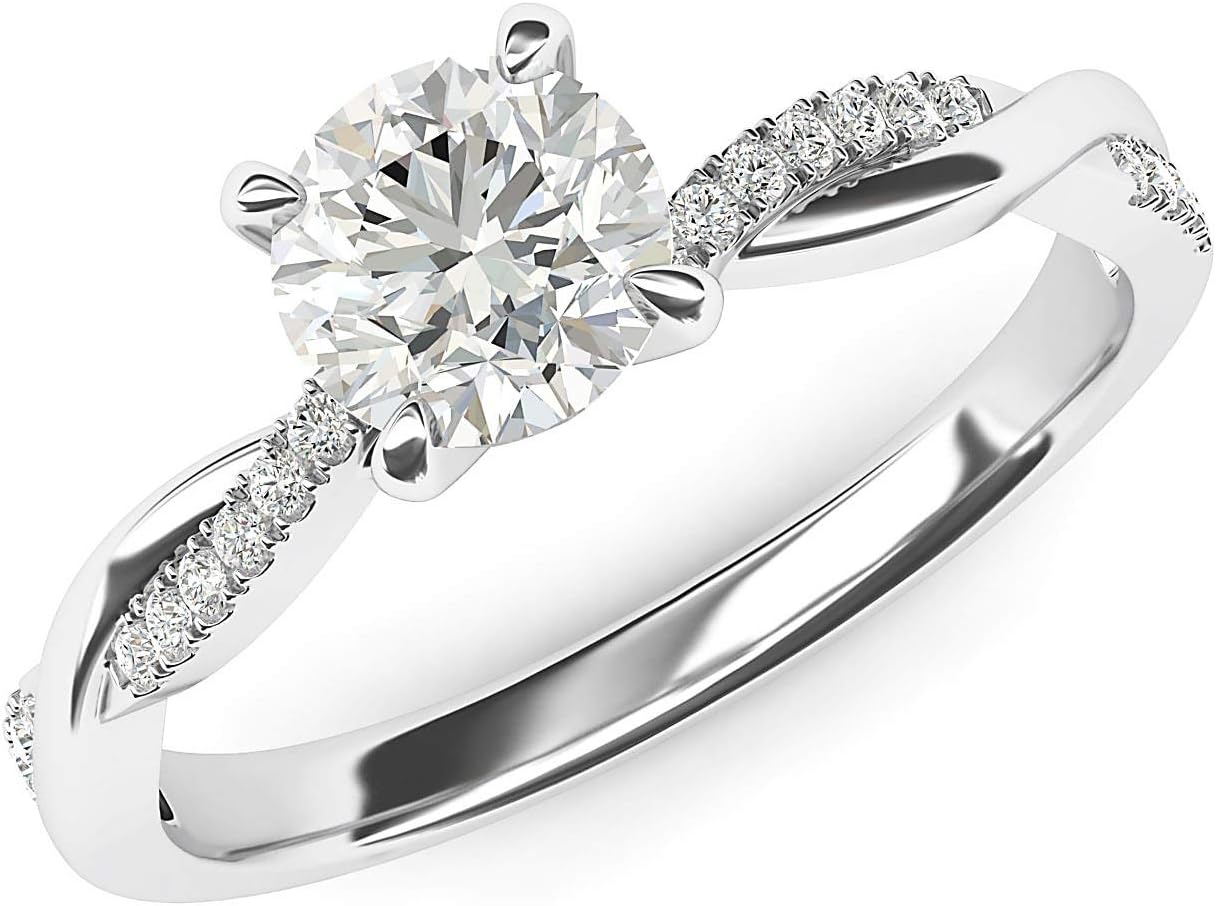
Sterling
$57.99
In stock on Amazon
Check price on Amazon14K Gold — The Recommended Daily-Wear Standard
14K gold at 58.3% pure gold is the metal The Knot’s Engagement Ring Metal Guide identifies as the most popular karat for American engagement rings, and the designation is earned. The combination of purity, durability, and price efficiency is genuinely difficult to beat for a ring intended to be worn continuously for years.
The maintenance burden drops substantially relative to sterling silver. Tarnish is not a meaningful concern. Rhodium plating on 14K white gold lasts longer than on silver because the base metal beneath is already a fine-jewelry alloy — and even when replating is eventually needed, it is a straightforward and inexpensive jeweler service. Prong integrity in 14K gold holds well through the kinds of daily contact — clinical work, physical labor, cooking, cleaning — that accelerate wear in silver settings.
Brides’ Lab-Created Gemstone Buying Guide notes that high-cut-quality moissanite has a refractive index of 2.65–2.69, exceeding that of diamond at 2.42, meaning a well-cut moissanite will often appear brighter in direct lighting than a comparable-size diamond. This optical performance is fully realized in a 14K setting that can be maintained with minimal ongoing effort — the combination of a colorless moissanite in the DEF equivalent color tier and a clean 14K white gold setting is what produces the reviewer reports of moissanite rings that outshine buyers’ own existing diamond jewelry.
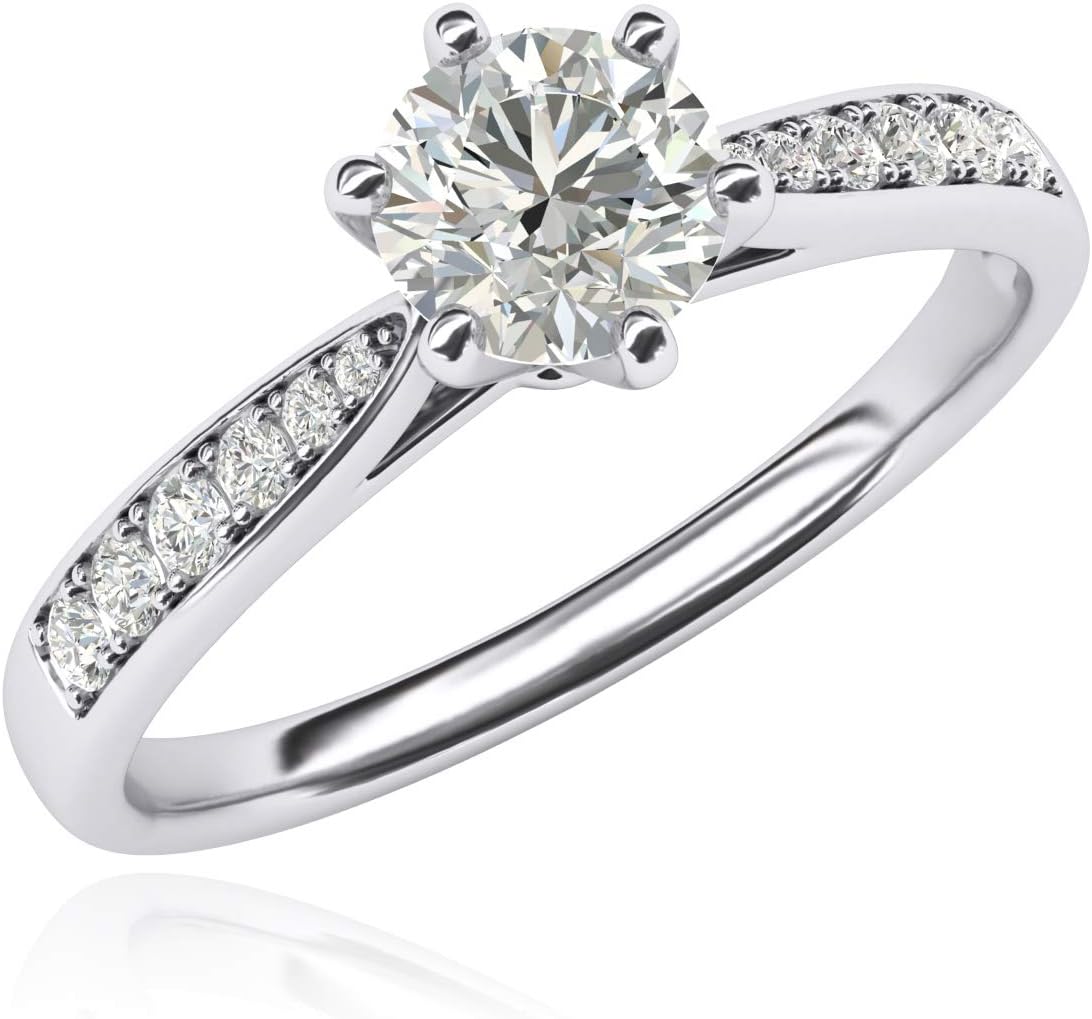
10k
$256.99
In stock on Amazon
Check price on AmazonReal-World Durability — What Owners Actually Report
Abstract hardness numbers only tell part of the story. The pattern that emerges consistently across owner reports in the moissanite solitaire category is this: the stone is almost never the source of a complaint. Moissanite at 9.25 Mohs is chemically stable, resistant to the soaps and cleaning agents documented in the GIA’s moissanite materials reference, and optically consistent over time in a way that lower-hardness stones are not. The complaints, when they appear, are about the metal.
Sterling silver in clinical environments performs better than the raw hardness numbers predict — for the stone. For the band, extended reports from healthcare workers confirm what the numbers suggest: the finish requires active maintenance, and prongs at high-contact points develop micro-movement faster than gold prongs do under equivalent conditions.
The split reviews on moissanite appearance — where one buyer reports it reads as clearly non-diamond and another reports it outshines a $7,000 natural diamond — reflect two real variables, not contradiction. First, moissanite quality tiers exist. Cut precision, facet alignment, and color grade all affect how a stone reads in light. A well-cut colorless moissanite in a clean, secure setting will reliably outperform a poorly cut lower-color natural diamond in fire and brilliance, as documented in PriceScope community wear reports on comparative optical performance. Second, buyer expectation is a real variable. Someone assessing the stone on its own optical terms will often conclude it performs beautifully. Someone applying the implicit standard of “does this read as a mined diamond to someone who knows diamonds” may arrive at a different judgment looking at the same ring.
Green skin discoloration is the fear most commonly expressed by first-time buyers of silver rings. It results from copper in the alloy reacting with skin oils and sweat. No owner in the current review cohort for quality 925 moissanite solitaires reports this outcome, but that does not mean it cannot happen — it can, particularly in hot and humid conditions or in people with documented copper-alloy sensitivity. If you have a history of green skin from copper-alloy costume jewelry, a gold-band option removes the variable entirely.
Frequently Asked Questions
Will a sterling silver moissanite ring turn my finger green? It can, but quality 925 formulations reduce this risk meaningfully in typical wear conditions. The current cohort of owner reports from quality 925 silver moissanite solitaires does not include this complaint. If you have a documented sensitivity to copper-alloy jewelry, choose a gold-band option.
How long does 18K white gold plating last on a sterling silver ring? “18K white gold plated” on a silver ring means a thin rhodium flash is electrodeposited on the surface — it is not the same as a solid 18K gold ring. In daily wear, this plating typically lasts six to eighteen months before the silver base metal shows through at contact points. Replating is inexpensive at most local jewelers, typically in the range of twenty to sixty dollars, but it is an ongoing maintenance cost to budget for.
Is a 10K white gold moissanite ring worth the upgrade over sterling silver? For a placeholder or occasional-wear ring: probably not, unless resale recognition matters to you. For a daily-wear ring you intend to keep for several years: yes. Tarnish resistance and reduced maintenance alone justify the price difference over a multi-year horizon. The International Gem Society’s Metal Hardness and Ring Durability Guide positions 14K as the more universally recommended upgrade step, not 10K, unless budget is a firm constraint.
Can a moissanite ring be resized? Yes, in most cases. Sterling silver rings are resizable by most local jewelers. Gold rings in 10K and 14K are also resizable and generally size more cleanly because gold alloys flow more predictably when worked. Rings with continuous pavé settings, eternity bands, or highly ornate twisted-rope shanks may be difficult or impossible to resize without compromising the design; confirm with your jeweler before purchasing if sizing flexibility is a priority.
What does a GRA moissanite certificate actually certify? GRA (Gemological Research Association) is a private certification body, not affiliated with the Gemological Institute of America. A GRA certificate confirms that a stone is genuine moissanite — lab-created silicon carbide — and typically records dimensions, color grade equivalent, and clarity grade equivalent. It does not carry the third-party laboratory standing of a GIA diamond grading report. For a moissanite purchase, a GRA certificate is a useful baseline authenticity document, but it should not be conflated with GIA-level grading authority.
The Decision Rule
If the ring is a placeholder, proposal stand-in, travel piece, or occasional-wear item: a quality 925 sterling silver moissanite solitaire is a rational, defensible choice. Prioritize stone cut quality and color grade over metal; the stone is what you will be looking at, and its durability is not metal-dependent.
If the ring will be worn daily for two or more years as a primary piece — through clinical work, physical labor, cleaning, or general continuous life: move to 14K gold. The maintenance overhead on silver in continuous wear is not trivial, and the upgrade cost for a simple solitaire setting is modest relative to years of lower-friction ownership.
If budget sits between silver and 14K: 10K gold is a legitimate step up, with the caveat that nickel-sensitive wearers should confirm the alloy composition before purchasing a white gold variant.
The moissanite stone itself is not the question. At 9.25 on the Mohs scale, as documented in the Gemological Institute of America’s moissanite materials reference, it is purpose-built for exactly the kind of daily wear these buyers describe. The question is always the metal holding it.