Solid 10K and 14K Gold Moissanite Rings vs. Gold-Plated Sterling Silver: When the Metal Upgrade Is Actually Worth It
Picture this: you’ve found a moissanite ring you love — the stone is brilliant, the design is exactly right — and now you’re staring at two listings that look nearly identical in the photos. One is solid 10K gold. The other is sterling silver with gold plating (a thin layer of gold applied over the silver base). The price difference is real, sometimes $80 to $200 or more for the same stone size, and you’re wondering whether the metal upgrade is marketing or math. This article is here to answer that question honestly, with the tradeoffs named explicitly and a clear decision rule at the end.
Quick definitions before we go deeper: moissanite is a lab-created gemstone (silicon carbide) prized for its diamond-like brilliance and hardness — it’s the stone in all the rings we’re discussing here. Sterling silver is 92.5% silver alloyed with copper; affordable and beautiful, but reactive to moisture and skin chemistry. Gold-plated sterling silver puts a thin gold layer (often 18K, measured in microns) over that sterling base. 10K solid gold is 41.7% pure gold alloyed with harder metals — the most durable common gold alloy. 14K solid gold is 58.3% pure gold, softer than 10K but more valuable and richer in color.
| EDITOR'S PICKTHELANDA 14k White Gold All Pri… | Mid-tier10k white gold 1.0 CT Classic 6… | Budget pickSterling Silver 4-Prong Petite… | |
|---|---|---|---|
| Metal | 14k White Gold | 10k White Gold | Sterling Silver |
| Center Stone | 2 CT | 1.0 CT | 1.0 CT |
| Cut Shape | Princess | — | — |
| Setting Style | Three-Stone | 6-Prong | 4-Prong Twisted Vine |
| Side Stones | — | Graduated | — |
| Price | $397.99 | $256.99 | $57.99 |
| See on Amazon → | See on Amazon → | See on Amazon → |
The Stone Is Not the Variable — The Band Is
Let’s settle the most important question first, because it shapes everything else: the moissanite stone performs identically regardless of whether the band is solid gold or plated silver. The gemstone is set mechanically into the prongs; the metal underneath does not alter its optical properties, hardness, or brilliance. According to the Gem Society’s moissanite reference page, moissanite registers 9.25 on the Mohs hardness scale — a property entirely independent of band metal. Reviewers across both price categories consistently describe stones as “stunning,” “eye-catching,” and “indistinguishable from diamond at arm’s length” whether the ring cost $90 or $350.
This is not a minor point — it means you are not paying extra for a better stone when you step up to solid gold. You are paying entirely for a better band, and the question is whether that band improvement is worth it for your specific use case.
Where reviews diverge sharply is at the metal. Aggregated buyer discussions on PriceScope’s moissanite engagement ring forum threads from 2024–2025 show a consistent pattern: buyers who chose solid 10K or 14K gold overwhelmingly cite a proposal, commitment, or “forever ring” context. Buyers who chose gold-plated sterling silver cluster around travel rings, work substitutes, fashion use, or intentional low-stakes wear. That context split is itself the clearest decision heuristic in this comparison.
Durability in the Real World: What Owners Actually Report
Gold-Plated Sterling Silver: The Fashion-Tier Option
The conventional wisdom is that gold plating wears off quickly. In practice, that’s an oversimplification. Multiple plated sterling silver moissanite ring owners — including those who work physically demanding jobs — report months of continuous daily wear with no visible tarnishing or color shift on the band. The key variable is plating thickness: a 2.5-micron or higher 18K gold layer over sterling silver behaves very differently from a flash-plated (0.5-micron) piece. Products that specify their plating thickness and use rhodium or PVD finishing over the gold layer tend to perform significantly longer.
The failure mode, when it comes, is predictable: the band develops a brassy or yellowish tint at wear points — knuckle contact, the underside of the shank — because the sterling copper alloy oxidizes once exposed. That’s not a catastrophic failure, but it is visible and it is permanent without replating. The Knot’s engagement ring metal guide notes that replating is a standard maintenance service available at most local jewelers, typically in the $25–$60 range, and recommends annual inspection for plated rings worn daily.
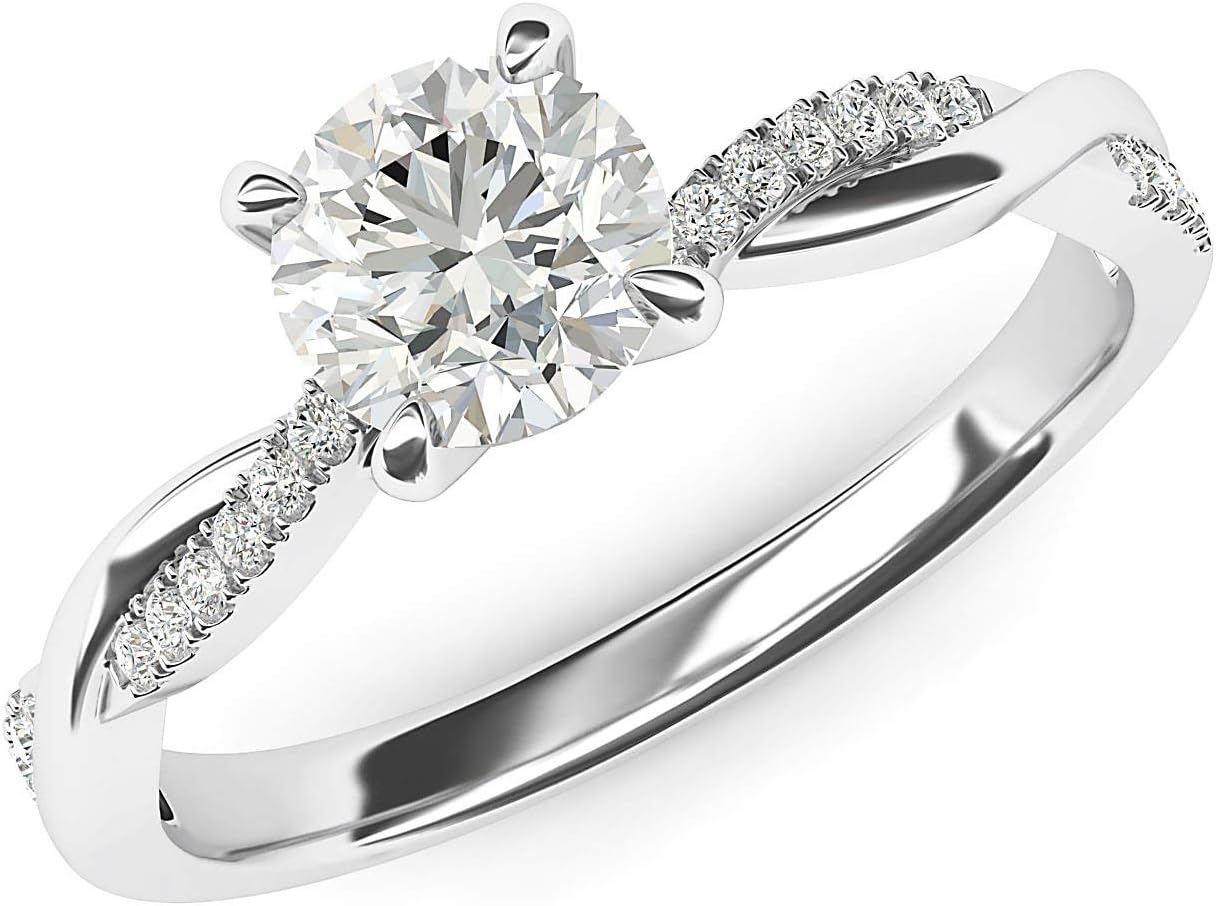
Sterling
$57.99
In stock on Amazon
Check price on AmazonSolid 10K White Gold: The Durable Mid-Tier Choice
10K white gold is the most durable gold alloy you’ll commonly find in this price range. It’s harder than 14K or 18K because a higher percentage of the alloy is composed of harder base metals such as nickel, palladium, or zinc. The Gemological Institute of America’s gold karat reference explains that lower-karat gold alloys resist scratching and bending better than higher-karat options precisely because of this composition. The tradeoff: some 10K white gold bands feel “delicate” to wearers who expected heft — a description that appears in multiple buyer reviews — because the settings are cast thin to keep the price accessible. This is a design and weight issue, not a purity issue.
Solid gold does not tarnish. It does not plate off. A well-maintained 10K or 14K gold band will look the same in fifteen years as it does on day one, assuming normal wear and occasional professional cleaning.
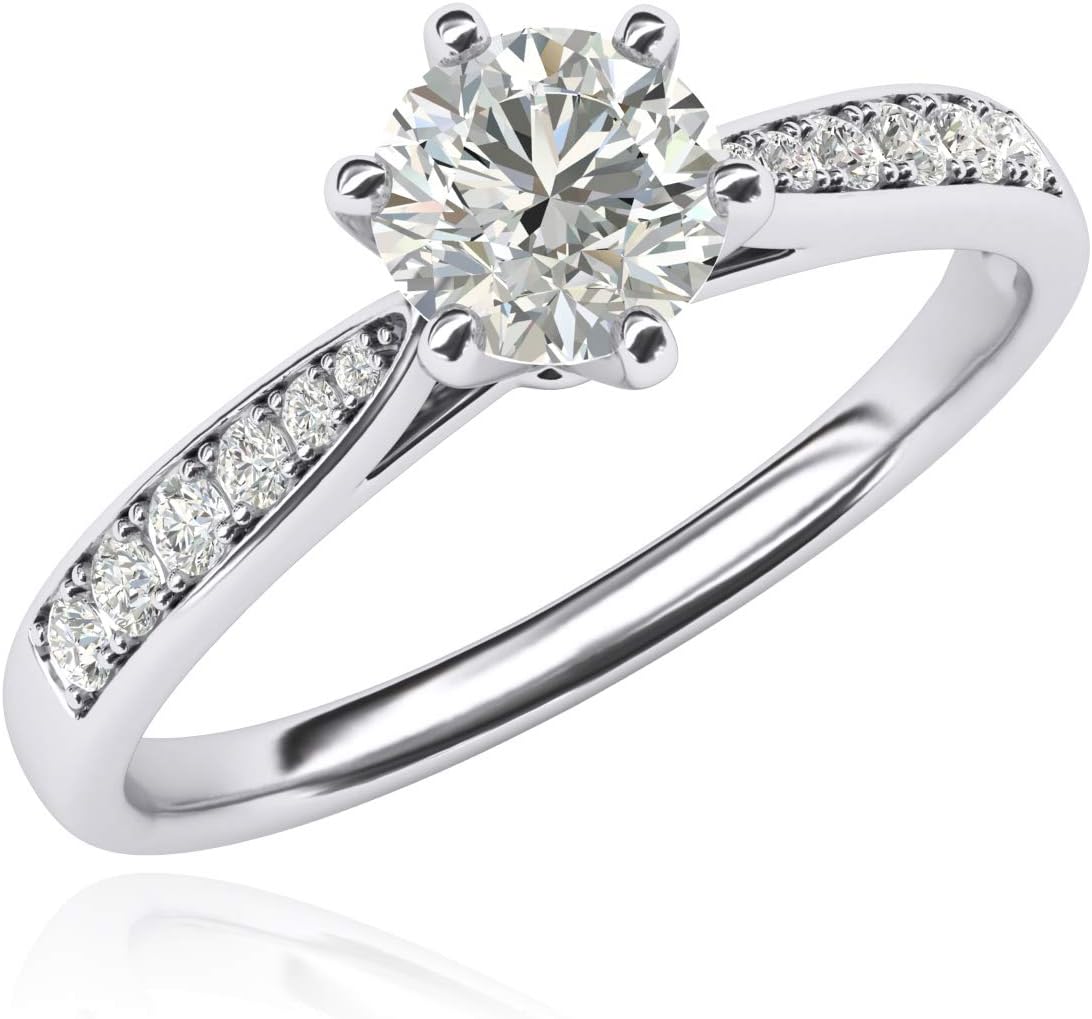
10k
$256.99
In stock on Amazon
Check price on AmazonSolid 14K Gold: The Premium Long-Term Investment
14K gold at 58.3% pure gold offers a meaningful step up in color warmth and perceived richness compared to 10K, while remaining harder and more scratch-resistant than 18K. For yellow and rose gold in particular, the visual difference between 10K and 14K is noticeable to the naked eye — 14K reads as richer and warmer. Brides’ moissanite engagement ring guide specifically identifies 14K as the most commonly recommended metal for engagement rings intended for daily wear, citing its balance of durability, color, and long-term value retention. The Gem Society’s metal comparison notes similarly that 14K is the standard recommendation for fine jewelry intended to last decades.
14K also carries better resale and trade-in value than 10K, and direct-to-consumer retailers at this tier increasingly include metal purity documentation — hallmarks, certificates, and stone origin cards — that are largely absent from the plated silver category. For rings intended as permanent commitment symbols, that documentation shifts meaningful risk off the buyer.
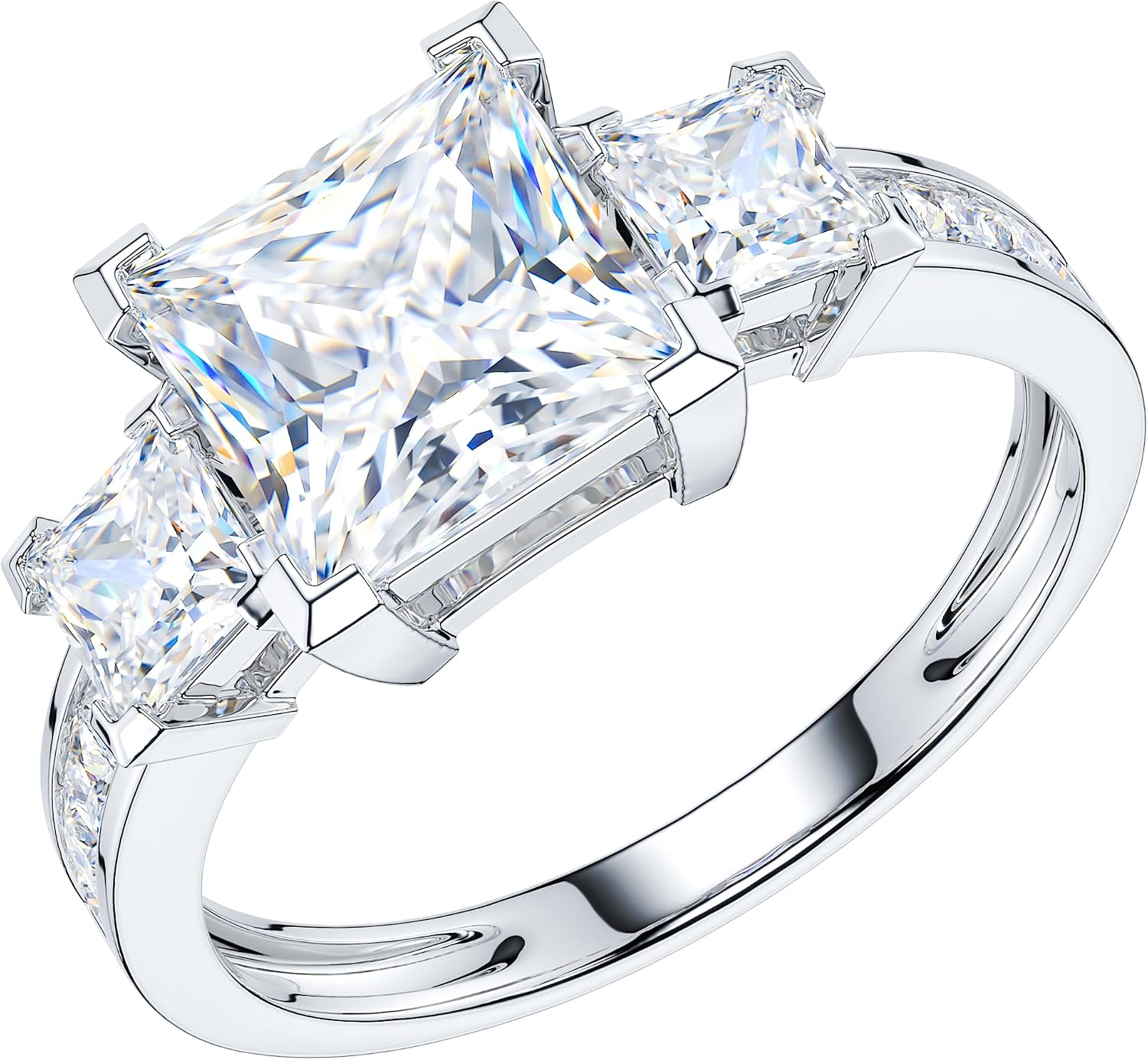
THELANDA
$397.99
In stock on Amazon
Check price on AmazonBy the Numbers
| Metal Type | Gold Content | Typical Wear Timeline | Maintenance Cost | Price Premium vs. Plated |
|---|---|---|---|---|
| Gold-plated sterling silver (18K plate) | 0% solid gold | 6–24 months at wear points before replating | $25–$60 to replate | Baseline |
| Solid 10K white gold | 41.7% gold | Indefinite with normal wear | Occasional cleaning only | +$80–$200 |
| Solid 14K white/yellow gold | 58.3% gold | Indefinite with normal wear | Occasional cleaning only | +$150–$400 |
Price premium estimates based on comparable moissanite stone sizes (1–2ct) across the direct-to-consumer market as of May 2026.
Certification and Paperwork: A Meaningful Differentiator
Here is a detail that separates the solid gold category in a way buyers often overlook: traceability documentation. Buyers of solid gold engagement rings in the $500–$1,500 range frequently call out receiving paperwork — stone grading cards, metal purity certificates, or both — as a meaningful positive. That documentation is the difference between a ring that says it’s solid 14K gold and one that carries a hallmark and a retailer who stands behind it.
In the plated sterling silver category, documentation is the exception rather than the rule. Most plated rings carry a “925” stamp indicating sterling silver content, but formal certification of the gold layer’s thickness or quality is uncommon. For a fashion ring, that’s fine. For a ring intended as a symbol of commitment, the absence of documentation shifts risk entirely to the buyer.
Per the Gem Society’s moissanite buying guide, moissanite itself is rarely certified to the same granularity as diamonds — most reputable sellers provide a manufacturer’s card rather than a formal GIA or IGI grading report. However, solid gold rings from established direct-to-consumer brands increasingly include metal purity documentation and stone origin cards at the $400-and-up tier. Brides’ moissanite ring coverage from early 2026 specifically flags certification as a question buyers should ask before purchasing any ring intended for daily engagement or wedding wear.
The Decision Framework: If X, Then Y
This is the part of the comparison that matters most. Based on aggregated buyer behavior and the durability picture above, the decision is not really about quality — it’s about use case and timeline.
If the ring is for a proposal, daily engagement wear, or as a permanent commitment symbol → solid 14K gold is the right call. The cost delta pays for itself in replating costs avoided, emotional permanence, and documentation. You are buying a 15-to-20-year object. Optimize for that timeline.
If you’re choosing between 10K and 14K for that engagement ring → 14K is the better value for most people. 10K is harder but noticeably less warm in color for yellow or rose gold, and the price difference at most direct-to-consumer retailers is modest. 10K makes more sense if you work with your hands extensively — construction, physical trades, healthcare — because the hardness premium is real. For office and everyday wear, 14K’s better color and comparable durability wins.
If the ring is for travel, work substitute, or fashion rotation → high-quality plated sterling silver is a rational choice. The stone looks identical. The band holds up longer than its reputation suggests when plating quality is good. Replating costs roughly $40 when needed. Spending $200 extra on solid gold for a ring you’re going to leave in a hotel safe or wear through a 12-hour nursing shift is genuinely not the right allocation.
Budget threshold for the upgrade: If your total ring budget is under $150, plated sterling silver is likely your only viable option in this category — and that’s a fine option, because the stone is the star. Between $150 and $300, solid 10K options begin to appear; the upgrade is worth serious consideration if the ring has any long-term significance. Above $300, solid 14K becomes accessible and is the default recommendation for anything intended as a keeper.
Frequently Asked Questions
Is 10K white gold strong enough for an engagement ring worn daily, or should I go to 14K? Yes, 10K white gold is strong enough for daily wear — it’s actually harder than 14K due to its higher base-metal alloy content, as noted in the Gemological Institute of America’s gold karat reference. The practical consideration is aesthetic: 10K white gold can look slightly cooler and less warm than 14K. For most daily-wear engagement ring use, either karat is durable; 14K is the conventional choice because it balances durability, warmth, and long-term value better.
How long does 18K gold plating over sterling silver last before it shows wear on the band? It depends heavily on plating thickness. A flash plating under 0.5 microns may show wear at contact points within three to six months of daily wear. A thicker layer of 2–3 microns with a rhodium topcoat can last one to two years before visible wear. The Knot’s jewelry care resources suggest annual inspection and replating at wear points as a reasonable maintenance cadence for plated rings worn daily.
Will a gold-plated moissanite ring tarnish if I wear it through a physically demanding job like nursing? Tarnishing — the darkening associated with exposed sterling silver — is prevented by the gold plating as long as the plating is intact. Once the plating wears through, particularly on the inner shank, the underlying sterling silver can oxidize and discolor. Multiple healthcare worker reviewers on PriceScope’s forum report six-plus months of continuous wear on quality plated rings without visible tarnishing, but the timeline accelerates with frequent hand-washing, sanitizer exposure, and glove friction, all of which chemically and mechanically stress the plating.
Does the moissanite stone quality change between a plated silver ring and a solid gold ring at a similar price? No. The stone’s cut, clarity, and optical performance are independent of the band metal. The Gem Society’s moissanite comparison confirms that the gemstone’s properties — including its 9.25 Mohs hardness and high refractive index — are intrinsic to the stone, not influenced by setting metal. The price difference between plated silver and solid gold at similar stone sizes reflects metal cost entirely, not stone quality.
What certification should I expect with a solid gold moissanite ring vs. a plated one? Solid gold rings from reputable direct-to-consumer retailers typically carry a metal purity hallmark (e.g., “10K” or “585” for 14K) and may include a stone origin card or manufacturer’s moissanite certificate. Lab diamond rings in the $500-and-up range increasingly include IGI or GIA grading reports for the stone. Plated sterling silver rings generally carry only a “925” silver stamp; formal documentation on the gold layer or stone is uncommon in this category.
At what budget threshold does it make financial sense to step up from plated silver to solid 10K gold? The math shifts around $200–$250 for moissanite rings. Below that threshold, solid 10K options are limited and plating quality on well-reviewed rings is often adequate for fashion or low-stakes daily wear. Above $250, solid 10K becomes accessible, and the long-term cost — no replating, no tarnish risk — favors the upgrade for any ring with lasting significance. If a ring is meant to be worn for five or more years, replating costs of $30–$60 every one to two years, as referenced in The Knot’s metal care guidance, close the price gap with solid gold quickly.