You bought a pendant you love — maybe it’s a small diamond solitaire, a birthstone drop, or a memorial locket holding a loved one’s ashes — and then the original chain snapped within a year. Now you’re back at square one, trying to figure out which replacement chain will actually last. Sterling silver, the alloy of 92.5% pure silver and 7.5% copper you’ll see stamped “.925” on quality pieces, is the most popular choice at this price point: it’s bright, affordable, and widely available. But “sterling silver chain” is a category, not a specification. Rope chains, cable chains, box chains, and paperclip chains all carry that same .925 stamp — and they behave very differently under real-life conditions. This article maps those differences in plain terms, presents the data points that matter, and gives you a clear decision rule for each use case.
| EDITOR'S PICKJewlpire 925 Sterling Silver Ch… | Mid-tierAmazon Essentials Sterling Yell… | Budget pickJewlpire 1.5mm Rope Chain 925 S… | |
|---|---|---|---|
| Chain style | Cable | Box | Rope |
| Metal | 925 sterling silver | Sterling silver | 925 sterling silver |
| Chain width | 1.1mm | 0.8mm | 1.5mm |
| Clasp type | Spring-ring | — | — |
| Lengths offered | 14–24 in | 18 in | 16–26 in |
| Gold plating | ✗ | ✓ | ✓ |
| Price | $18.99 | $15.20 | $14.99 |
| See on Amazon → | See on Amazon → | See on Amazon → |
The Four Chain Structures — What You’re Actually Buying
Before comparing durability, it helps to understand what each design is doing mechanically. The way links interlock determines how a chain fails — or doesn’t.
Rope Chain
Individual oval or round links are twisted together in a spiral pattern, similar to a braided cable. The interlocking structure distributes stress across many contact points rather than concentrating it at a single link. This is the structural reason rope chains dominate durability discussions: there’s no single weak seam bearing the full load of a pendant or a snag. Visually, they catch light along every twist, giving them a textured, premium look even at fine gauges.
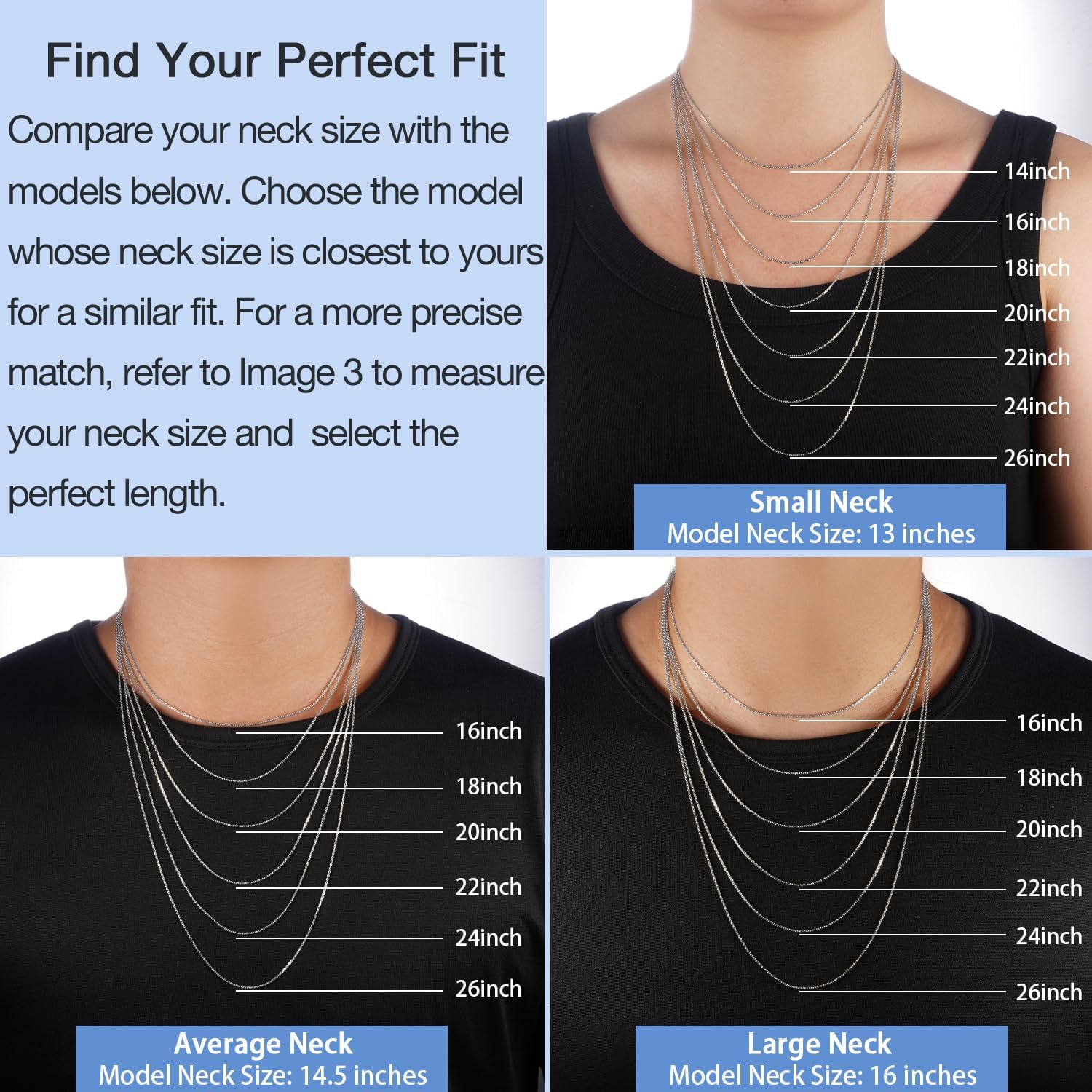
Jewlpire
$18.99
In stock on Amazon
Check price on AmazonBox Chain
Square links connected in a continuous line give this style a blocky, architectural look. The square profile makes it particularly resistant to kinking, and it lies especially flat on the collarbone — two qualities that make it appealing for layering. The catch: box chains are sensitive to gauge. A 0.8mm box chain and a 1.5mm box chain are not the same product in terms of durability. Below 1.2mm, link-junction failure becomes a meaningful risk under pendant load, particularly when the pendant weighs more than two to three grams.
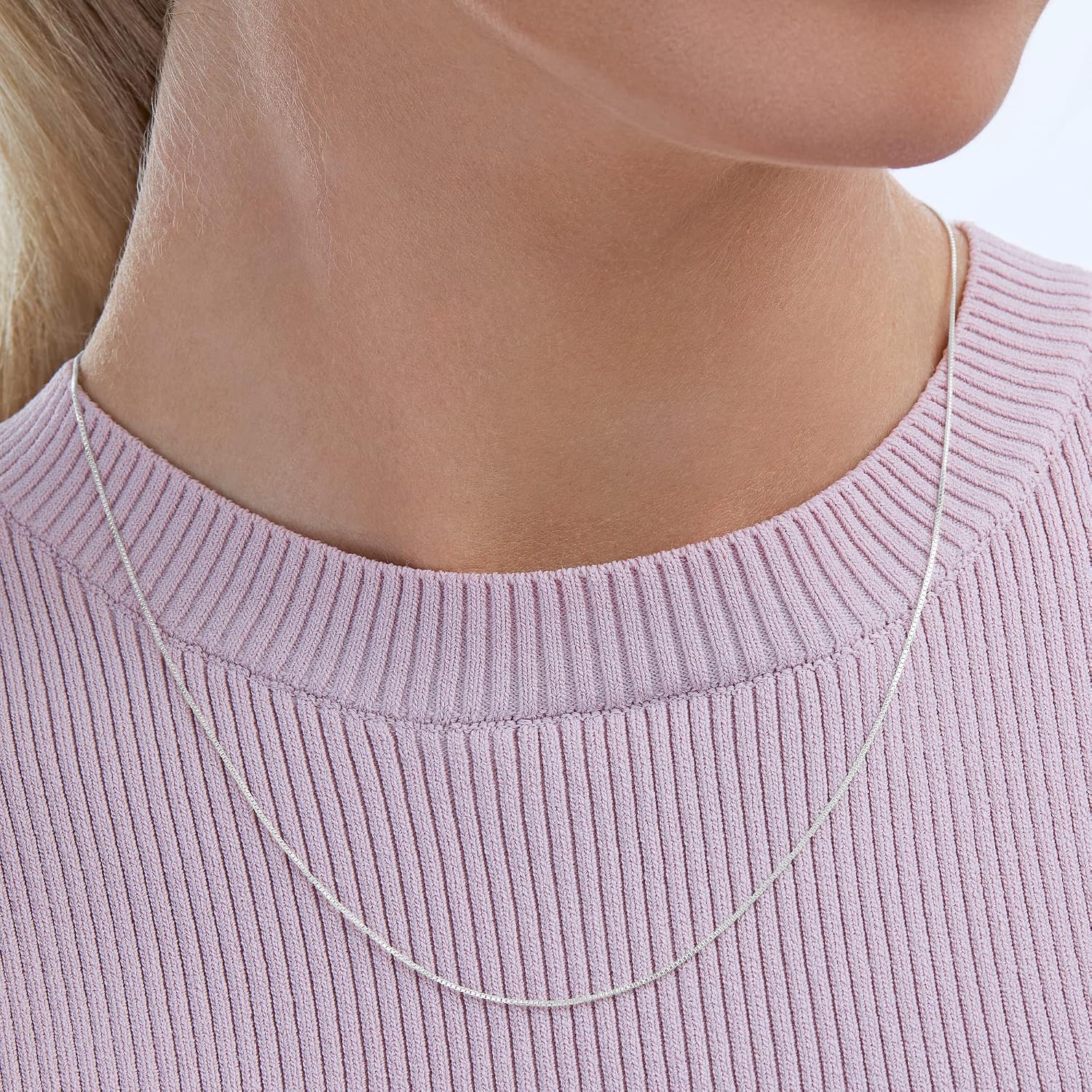
Amazon
$15.20
In stock on Amazon
Check price on AmazonCable Chain
The most familiar silhouette: uniform oval links connected in a flat plane, alternating at 90-degree angles. Cable chains are clean and versatile — the design most people picture when they imagine a necklace. At fine gauges under 1.2mm, however, individual links are thin enough that repeated lateral stress from a heavy pendant swinging or a clasp being tugged can fatigue them over time. At 1.2mm and above, cable chains perform reliably for most everyday scenarios.
Amazon
$15.20
In stock on Amazon
Check price on AmazonPaperclip Chain
Elongated, rectangular links that lie flat — named for their resemblance to the office staple. Paperclip chains entered mainstream popularity around 2019–2020 and have held consistent placement in trend-forward fine jewelry. Their larger link size makes them highly visible and editorial-looking. Because each link is larger and more open, they flex well under lateral force, but they carry fewer long-term durability data points than the three classic styles above. For fashion-forward occasional wear, they are an excellent choice. For daily active wear with a pendant, the evidence base is thinner.
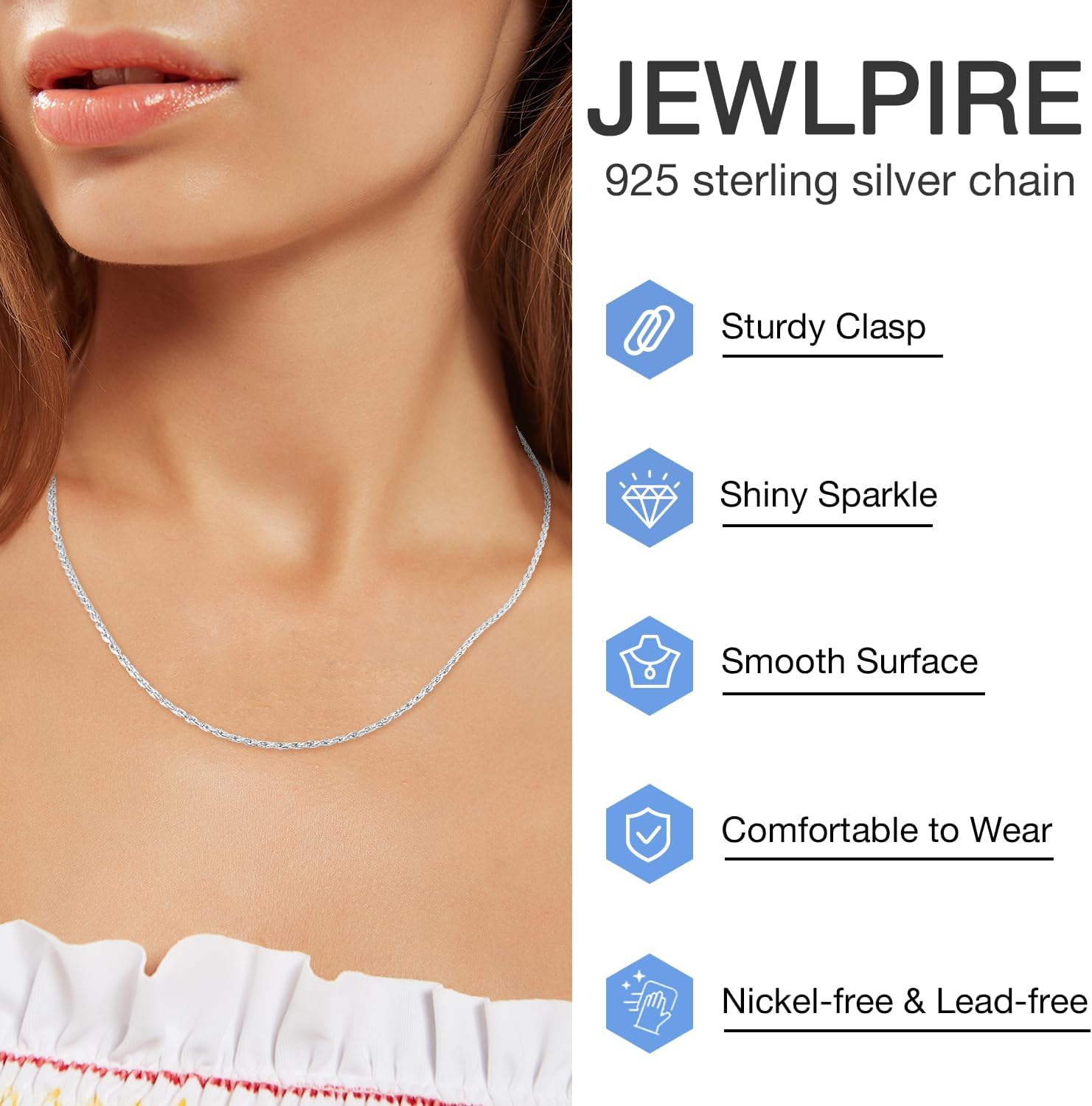
Jewlpire
$14.99
In stock on Amazon
Check price on AmazonDurability by the Numbers
Aggregated buyer review patterns across sterling silver chain products reveal a clear hierarchy. Per Harper’s Bazaar’s annual roundup of everyday chain necklaces (published under the title “The Best Chain Necklaces to Wear Every Day”) and Brides’ ongoing coverage of sterling silver jewelry (in their repeatedly updated piece “The Best Sterling Silver Necklaces, Tested and Reviewed”), reviewer sentiment breaks down roughly as follows:
| Chain Type | Daily-Wear Satisfaction | Notable Failure Pattern |
|---|---|---|
| Rope (≥1.5mm) | Highest consistency | Rare; usually clasp-related |
| Box (≥1.2mm) | Strong | Clasp wear at heavier gauges |
| Cable (≥1.2mm) | Strong | Link fatigue below 1mm |
| Box (0.8mm) | Split — breakage reported | Link junction failure |
| Cable (sub-1mm) | Split | Single-link failure under load |
| Paperclip | Positive (limited long-run data) | Insufficient long-term record |
The gauge variable is doing substantial work in that table. A chain described simply as “box chain” or “cable chain” can be a completely different product depending on whether it measures 0.8mm or 1.5mm — and not all product listings make that easy to find. When comparing options, treat gauge as a primary filter, not a footnote.
What Real Buyers Report: Patterns Worth Taking Seriously
Across aggregated reviews of sterling silver chains — including products carrying a Made in Italy designation, which buyers frequently cite as a deliberate purchase driver — several behavioral patterns repeat consistently enough to be directionally reliable.
Rope chain buyers are the most satisfied under active wear. Multiple reviewers across different rope chain products report wearing their chains through gym workouts, sunscreen application, and occasional water exposure without visible structural failure over 12–18 months. This aligns with what the Gem Society’s resource on silver alloys and jewelry metals notes: the twisted construction of a rope chain creates fewer exposed stress points per unit length than a flat-link cable, which contributes to better tensile performance under pendant load.
Box chain and cable chain outcomes split along gauge lines. The same 0.8mm box chain product can generate both an enthusiastic 18-month durability review and a breakage complaint — not because one reviewer is wrong, but because pendant weight, activity level, and clasp habits create dramatically different stress environments. The Gem Society’s jewelry metals guidance recommends a minimum of 1.2–1.5mm gauge when pairing a box or cable chain with a pendant weighing more than approximately three to four grams.
A meaningful purchase context that deserves direct acknowledgment: several buyers across multiple chain types purchased specifically to hold a memorial pendant — in some cases, a locket containing a loved one’s ashes. This is a context where chain failure carries weight far beyond inconvenience. If this describes your purchase, the data points toward a rope chain at 1.5mm or above, with a lobster-claw clasp rated for heavier loads, as the most defensible choice available.
The Made in Italy designation correlates with tarnish resistance in buyer reporting. Buyers who mention prior negative tarnish experiences on lower-priced chains frequently cite Italian provenance as a deliberate upgrade decision. Italy’s jewelry manufacturing industry, particularly in the Arezzo and Vicenza regions, operates under European hallmarking requirements that mandate verified metal purity at the point of manufacture. The Knot’s chain necklace buying guide (“How to Choose the Right Chain Necklace for Your Pendant”) notes that Italian-made sterling silver chains are subject to stricter hallmarking standards than many mass-market alternatives, giving buyers a degree of traceability beyond the .925 stamp alone.
Anti-Tarnish Finishes: What They Do and What They Don’t
Anti-tarnish finishes — typically a thin rhodium plate or proprietary lacquer applied over the sterling silver — are genuinely useful for daily-wear chains, but buyers should understand their limits. Rhodium plating adds a hard, bright surface that resists oxidation, but it wears through at contact points (clasp, pendant bail, areas of fabric friction) over roughly 12–36 months depending on plating thickness and use intensity. Once the plating wears through, the underlying sterling silver tarnishes normally.
This means an anti-tarnish finish buys time, not permanent protection. For most buyers, that is a worthwhile trade: the early months of ownership tend to be the highest-wear period, and a plated chain often outlasts the decision window of “do I even like wearing this style?” For high-sentimental-value chains, plan to re-plate periodically or maintain the surface with regular polishing cloth use, as recommended in the Gemological Institute of America’s Jewelry Care and Cleaning Guide.
Layering Logic: Getting Chain Lengths Right
If you’re buying multiple chains to layer — a styling approach that Harper’s Bazaar and Vogue have consistently featured across the 2024–2026 period — the standard length ladder for most necklines is:
- 14–16 inches: Sits at or just below the collarbone. Works as the highest layer.
- 18 inches: Falls at the upper chest. The most versatile single-chain length.
- 20–22 inches: Mid-chest placement. Well-suited for pendants or as the lowest layer in a two-chain stack.
- 24 inches and above: Sternum to upper abdomen. Statement layer or solo pendant chain.
For layering to read cleanly, aim for at least a 2-inch difference between each chain’s length. Mixing chain styles — rope paired with paperclip, cable paired with box — creates more visual contrast than two of the same structure. Brides’ jewelry styling coverage notes that varying both length and texture simultaneously is the most reliable approach to prevent chains from visually merging into one muddled strand.
Frequently Asked Questions
Which sterling silver chain style is least likely to break under daily wear? Rope chain, consistently. The interlocking twisted-link structure distributes load across many contact points rather than concentrating stress at a single link or junction. This advantage is most pronounced when the chain holds a pendant. At equivalent gauge, rope chains outperform box and cable in long-term durability reviews.
Can I wear a sterling silver chain in the shower or while swimming without it tarnishing? Occasional fresh-water exposure is unlikely to cause rapid tarnishing on a quality .925 sterling chain, particularly one with an anti-tarnish finish. However, chlorinated pool water and salt water both accelerate oxidation significantly, and soap residue can dull the finish over time. The Gemological Institute of America’s Jewelry Care and Cleaning Guide recommends removing fine silver jewelry before extended pool or ocean exposure. Non-chlorinated shower use is a lower risk, but repeated exposure without periodic polishing will visibly dull the surface for most buyers within 6–12 months.
What gauge rope chain is strong enough to hold a pendant without kinking? For pendant use, 1.5mm is the practical minimum for a rope chain that resists kinking under the weight of a small to medium pendant (roughly 2–5 grams). For heavier pendants — lockets, large stone settings — 2mm provides meaningfully more structural integrity. Below 1.2mm, rope chains can develop micro-kinks at the pendant bail junction that are difficult to reverse without professional repair.
What does “Made in Italy” actually mean for a sterling silver chain? Italy’s jewelry industry operates under European hallmarking standards that require verified metal purity at the point of manufacture. Practically, the .925 stamp on an Italian-made chain is backed by a regulated production environment with quality controls that many lower-cost alternatives don’t replicate. Buyers who have experienced tarnishing or breakage on unbranded alternatives frequently identify Italian provenance as a meaningful differentiator. For a high-sentimental-value or daily-wear chain, the premium is generally justified. For an occasional-use fashion chain, the gap matters less.
How do I choose chain lengths for layering multiple necklaces? Start with an anchor length — typically 18 inches — then add chains at least 2 inches longer (20 inches, 22 inches) for each subsequent layer. Measure the distance from your collarbone to where you want each chain to fall before ordering. Neckline matters: a V-neck reads differently than a crew neck, and chains that layer beautifully on bare skin can visually compress under a high collar. When in doubt, size up — chains can be worn longer, but a chain that’s too short for a layered look has no practical adjustment.
Is a 1mm cable chain strong enough for a pendant? It depends on pendant weight. A 1mm cable chain is borderline for anything heavier than a very lightweight charm or small stone drop under two grams. For a standard pendant in the 3–6 gram range, 1.2–1.5mm is a safer minimum. For heavier pieces — large lockets, multi-stone settings — go to 1.5mm or switch to a rope chain at equivalent gauge, which will outperform cable under the same load. Multiple reviewers report 1mm cable chain failure specifically under pendant weight, while reporting that comparable rope chains survived equivalent use without issue.
The Decision Rule
If you’re buying a chain for pendant use under daily active wear: rope chain at 1.5mm or above. This is where the review data is clearest and most consistent.
If you’re buying a chain for layering without a pendant: box chain at 1.2mm or above gives you the flattest lay and cleanest visual separation between layers, with reliable durability.
If you’re buying for occasional wear or fashion styling: paperclip chain delivers the most contemporary visual impact, with the caveat that long-run durability data is thinner than for the three classic styles.
If you’re buying for a high-stakes sentimental purpose — a memorial pendant, an heirloom bail, anything where failure is not acceptable: rope chain, 1.5–2mm, lobster-claw clasp, Made in Italy if budget allows. That combination represents the most defensible choice across every data dimension available.